Area under vine at the estate, from its technical sheet — it does not change from one vintage to the next. Each vintage’s blend, by contrast, departs from it: that figures on its own page.
The origins of Château Monbousquet date back to 1540. After several changes of hands, the estate enjoyed a first period of growth in the 18th century under the de Carles family, who shaped the château as it appears today.
In the 19th century, Monbousquet gained renown through the enlargement of the vineyard and improved viticultural practices, becoming one of the major estates of Saint-Émilion. After a decline in the early 20th century, the property was revived after 1945 under the Querre family, who rebuilt the vineyard.
The real turning point came in 1993 with the arrival of Chantal and Gérard Perse. Profoundly restructured and modernised, the estate then rose spectacularly, crowned in 2006 by its classification as Grand Cru Classé.
Today, Monbousquet stands as one of the most emblematic crus of Saint-Émilion, recognised for its rich, elegant and expressive style.
Terroir
Covering 34 hectares, the soils are extremely varied:
• Sand and clay-sand with iron pan between 60 and 80 cm.
“Best score”: the highest score recorded for this wine, with its source. “Character”: the overall reading of the year across the appellation, which an estate may depart from.
All technical sheets
The estate’s grand vin and other cuvées, vintage by vintage: VinCod sheet and printable PDF.
The texts below copy in one click for your product sheets, catalogues and social channels. The printable sheet condenses the whole page onto a single A4 page.
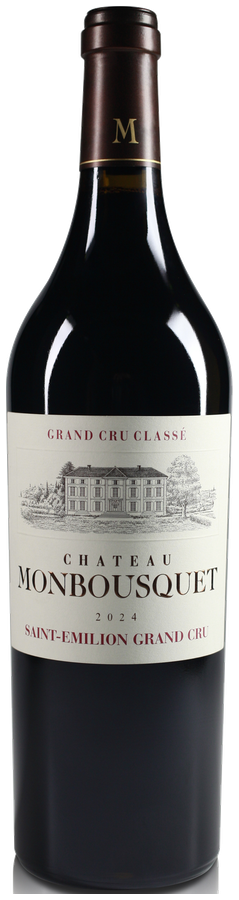
For this vintage, the media library contains: packshots, labels. High-definition packshots, labels, back labels and lifestyle photos are reserved for clients and partners, on the Compagnie Médocaine’s VinCod media library.
 Clos Fourtet
 Château Côte de Baleau
 Château Cruzeau
 Château de Pressac
 Château L'Église d'Armens
 Château Cheval Blanc
 Château Grand Corbin Despagne
 Château La Chapelle Aux Moines
 Château Troplong Mondot
 Château La Gaffelière
 Château Chauvin
 Château Pavie
 Château Angélus
 Château Larcis Ducasse
 Château Ausone
 Château Beau-Séjour Bécot
 Château Canon
 Château Figeac
 Château Pavie Macquin
 Château Trotte Vieille
 Château Valandraud
 Château Bellevue
 Château Corbin
 Château de Ferrand
 Château Fombrauge
 Château de Fonbel
 Château Fonroque
 Château Grand Corbin
 Château La Clotte
 Château Larmande
 Château Laroze
 Château Soutard
 Château Laroque