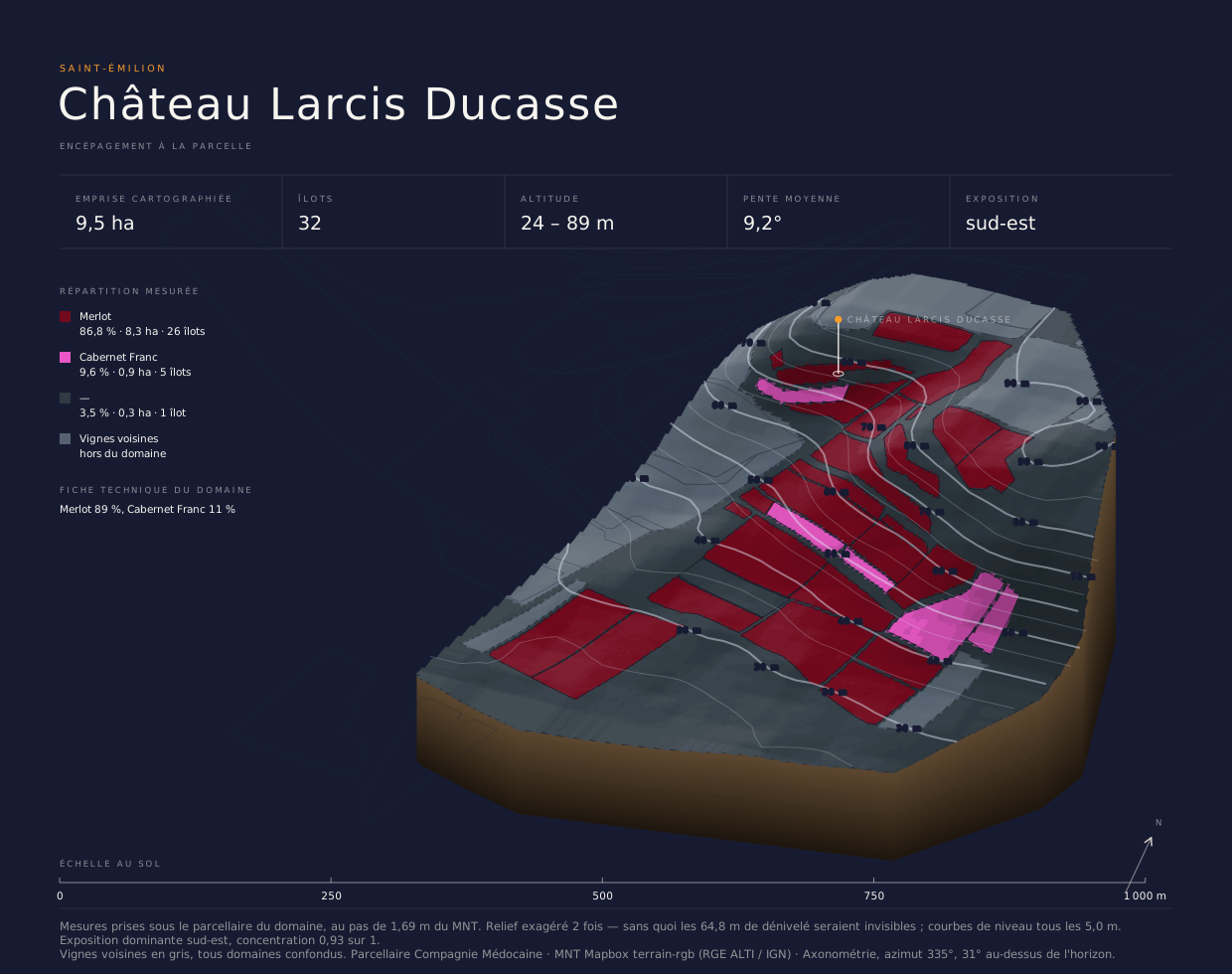
Area under vine at the estate, from its technical sheet — it does not change from one vintage to the next. Each vintage’s blend, by contrast, departs from it: that figures on its own page.
In the 3D view: drag to rotate, scroll to zoom, Shift+drag to pan, double-click to reset.
Footprint, parcels and their split are measured on the Compagnie Médocaine’s own parcel survey; elevation, slope and aspect on the Mapbox terrain-rgb digital terrain model, derived from IGN’s RGE ALTI over France. Compare with the blend on the technical sheet, at the top of the page: the two answer different questions.
The wine
A short distance from the village of St-Emilion, Larcis Ducasse is a hillside vineyard, lying precisely at the heart of the Grande Côte, the Côte Pavie.
Its land forms a layered mille-feuille of soils made up of clays and limestones, marked by the presence of resurgent springs that rise beneath the limestone in the blue clays.
A place of singular balance, shaped by the dry and the damp, in permanent contrast between the luminous atmosphere of the south-facing slope
and the constant coolness of the clay-limestone soils.
Terroir
Although it forms a single block of 11.34 hectares, the vineyard of Château Larcis Ducasse is planted on several geological formations. The character of the terroir stems from the presence of clay-limestone soils on due-south-facing slopes, which deliver very fine ripeness. Freshness and minerality, complexity and structure come from the range of different bedrocks, from the asteriated limestone of the plateau down to the iron-rich feldspathic sands at the foot of the slope. Such a palette of terroirs, combined with the grape varieties, gives rise to expressions that are as varied as they are complementary. This range feeds the complexity and the nobility of the wines produced at Château Larcis Ducasse.
Estate figures
11.34 haArea
2025 vintage figures
40 hl/haYield
38 yrsVine age
Alcohol, yield and vine age are those of the 2025 vintage; they vary from year to year. Only the area above stays stable from one vintage to the next.
“Best score”: the highest score recorded for this wine, with its source. “Character”: the overall reading of the year across the appellation, which an estate may depart from.
Other cuvées from the estate
Murmure de Larcis DucasseRouge · 1 vintage (2019–2019)
The texts below copy in one click for your product sheets, catalogues and social channels. The printable sheet condenses the whole page onto a single A4 page.
This wine’s visuals are grouped in the media library. High-definition packshots, labels, back labels and lifestyle photos are reserved for clients and partners, on the Compagnie Médocaine’s VinCod media library.
Sheet checked on September 21, 2026. Technical data: the estate’s VinCod sheets. Critic scores: sources cited above, with their date. Vintage benchmarks and character: Compagnie Médocaine’s own editorial read. Soils and relief, where shown: the Compagnie Médocaine’s parcel survey and the Mapbox/IGN terrain model.

 Clos Fourtet
 Château Côte de Baleau
 Château Cruzeau
 Château de Pressac
 Château L'Église d'Armens
 Château Cheval Blanc
 Château Grand Corbin Despagne
 Château La Chapelle Aux Moines
 Château Troplong Mondot
 Château La Gaffelière
 Château Chauvin
 Château Pavie
 Château Angélus