Area under vine at the estate, from its technical sheet — it does not change from one vintage to the next. Each vintage’s blend, by contrast, departs from it: that figures on its own page. The estate does not publish the share of each grape variety: they are listed without proportions.
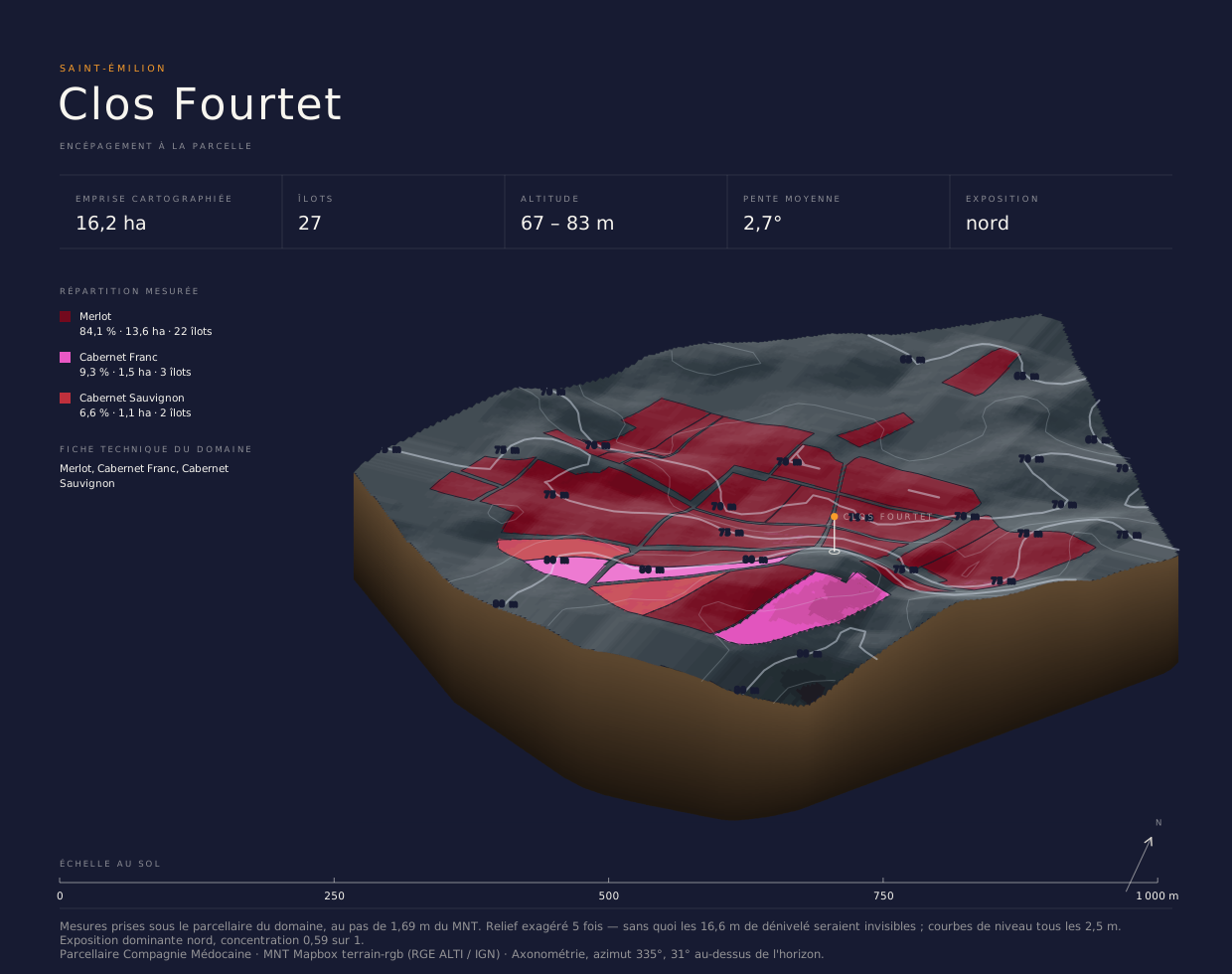
In the 3D view: drag to rotate, scroll to zoom, Shift+drag to pan, double-click to reset.
Footprint, parcels and their split are measured on the Compagnie Médocaine’s own parcel survey; elevation, slope and aspect on the Mapbox terrain-rgb digital terrain model, derived from IGN’s RGE ALTI over France. Compare with the blend on the technical sheet, at the top of the page: the two answer different questions.
Why buy it
At the summit of the limestone plateauThe benchmark terroir for the great Saint-Émilion wines, and one of the best-situated crus in the appellation.
Premier Grand Cru ClasséTwenty-two hectares, forty thousand bottles, twenty-eight hectolitres per hectare.
99/100 from Vinous in 2022Nine vintages at 95 or above since 2017, never below 95 since 2009.
Ageing in an underground cellarFourteen to eighteen months beneath the plateau, including 40% in new barrels and 2% in clay jars.
The wine
Situated at the top of the limestone plateau that forms the privileged terroir of the great wines of Saint-Émilion, Clos Fourtet is at once one of the best-sited and one of the most highly regarded crus.
Terroir
Clos Fourtet has a naturally drained terroir of clay-limestone soil with a shallow topsoil. The plantings are 85% Merlot, 10% Cabernet Sauvignon and 5% Cabernet Franc. The vines, with an average age of 25 years, are worked in a traditional and considered manner: use of organic and mineral fertilisers, debudding, protection of the embryonic bunches and of the vine stocks against disease, mites and fungi, leaf removal, and green harvesting to optimise concentration.
Estate figures
22 haArea
2025 vintage figures
28 hl/haYield
35 yrsVine age
40,000 bottlesProduction
Alcohol, yield and vine age are those of the 2025 vintage; they vary from year to year. Only the area above stays stable from one vintage to the next.
“Best score”: the highest score recorded for this wine, with its source. “Character”: the overall reading of the year across the appellation, which an estate may depart from.
Other cuvées from the estate
La Closerie de FourtetRouge · 3 vintages (2009–2012)
The texts below copy in one click for your product sheets, catalogues and social channels. The printable sheet condenses the whole page onto a single A4 page.
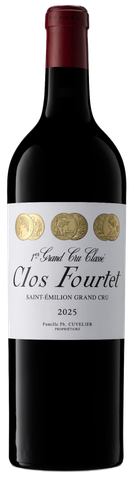
For this vintage, the media library contains: packshots, labels. High-definition packshots, labels, back labels and lifestyle photos are reserved for clients and partners, on the Compagnie Médocaine’s VinCod media library.
Sheet checked on September 21, 2026. Technical data: the estate’s VinCod sheets. Critic scores: sources cited above, with their date. Vintage benchmarks and character: Compagnie Médocaine’s own editorial read. Soils and relief, where shown: the Compagnie Médocaine’s parcel survey and the Mapbox/IGN terrain model.
 Château Côte de Baleau
 Château Cruzeau
 Château de Pressac
 Château L'Église d'Armens
 Château Cheval Blanc
 Château Grand Corbin Despagne
 Château La Chapelle Aux Moines
 Château Troplong Mondot
 Château La Gaffelière
 Château Chauvin
 Château Pavie
 Château Angélus
 Château Larcis Ducasse