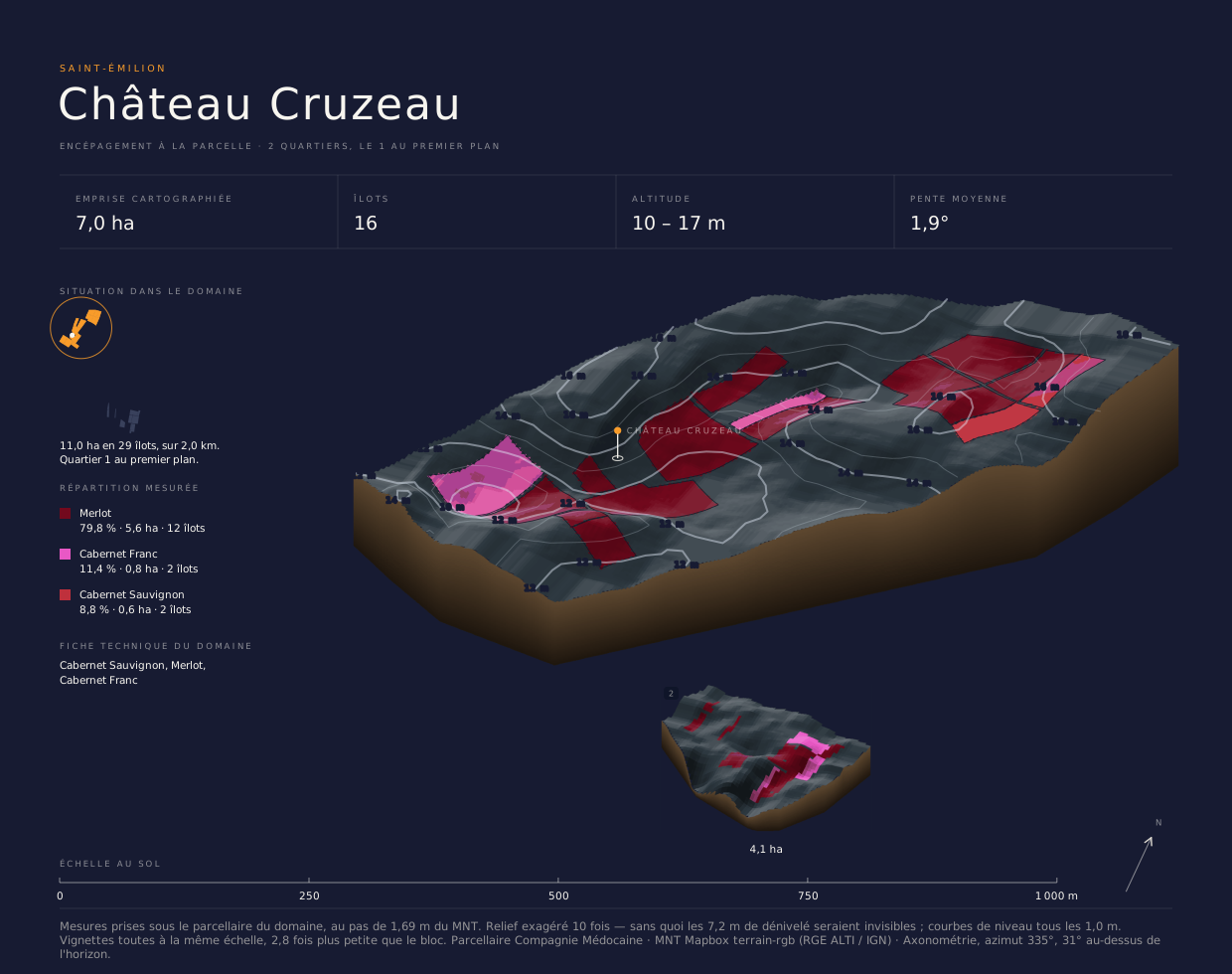
Area under vine at the estate, from its technical sheet — it does not change from one vintage to the next. Each vintage’s blend, by contrast, departs from it: that figures on its own page. The estate does not publish the share of each grape variety: they are listed without proportions.
In the 3D view: drag to rotate, scroll to zoom, Shift+drag to pan, double-click to reset.
Footprint, parcels and their split are measured on the Compagnie Médocaine’s own parcel survey; elevation, slope and aspect on the Mapbox terrain-rgb digital terrain model, derived from IGN’s RGE ALTI over France. Compare with the blend on the technical sheet, at the top of the page: the two answer different questions.
Why buy it
Thirty-eight thousand bottles, 40-year-old vinesEight hectares on coarse sands, in Saint-Émilion.
The Luquot family since 1907Jean-Baptiste Luquot, who had arrived from Corrèze two years earlier, bought the estate; the family still holds it today.
Twelve months in barrelTwenty percent new oak, 40% one-wine barrels, 40% two-wine barrels.
The wine
Château Cruzeau came into being in the 16th century, at the instigation of Amanieu de Labat, jurat of Libourne. Even then, vines surrounded the estate, as the Belleyme map of the 18th century attests. Here, the land and wine have always been bound together.
But the family history truly begins at the start of the 20th century.
Jean-Baptiste Luquot, a native of Corrèze, left his homeland with his wife Marie Escure to settle in the Gironde in 1905. First a farmer, then a pedlar, he became a fine-wine merchant. Driven by a quiet but determined ambition, he acquired Château Cruzeau on 9 December 1907.
A founding act that marked the beginning of a family venture still alive today.
Terroir
Coarse sands
Estate figures
8.33 haArea
2022 vintage figures
40 yrsVine age
38,000 bottlesProduction
Alcohol, yield and vine age are those of the 2022 vintage; they vary from year to year. Only the area above stays stable from one vintage to the next.
“Best score”: the highest score recorded for this wine, with its source. “Character”: the overall reading of the year across the appellation, which an estate may depart from.
An offer on Château Cruzeau
Availability, allocations and terms: the Compagnie Médocaine will reply promptly. The estate and vintage are already filled in in the message.
The texts below copy in one click for your product sheets, catalogues and social channels. The printable sheet condenses the whole page onto a single A4 page.
For this vintage, the media library contains: packshots, back labels. High-definition packshots, labels, back labels and lifestyle photos are reserved for clients and partners, on the Compagnie Médocaine’s VinCod media library.
Sheet checked on September 21, 2026. Technical data: the estate’s VinCod sheets. Critic scores: sources cited above, with their date. Vintage benchmarks and character: Compagnie Médocaine’s own editorial read. Soils and relief, where shown: the Compagnie Médocaine’s parcel survey and the Mapbox/IGN terrain model.

 Clos Fourtet
 Château Côte de Baleau
 Château de Pressac
 Château L'Église d'Armens
 Château Cheval Blanc
 Château Grand Corbin Despagne
 Château La Chapelle Aux Moines
 Château Troplong Mondot
 Château La Gaffelière
 Château Chauvin
 Château Pavie
 Château Angélus
 Château Larcis Ducasse