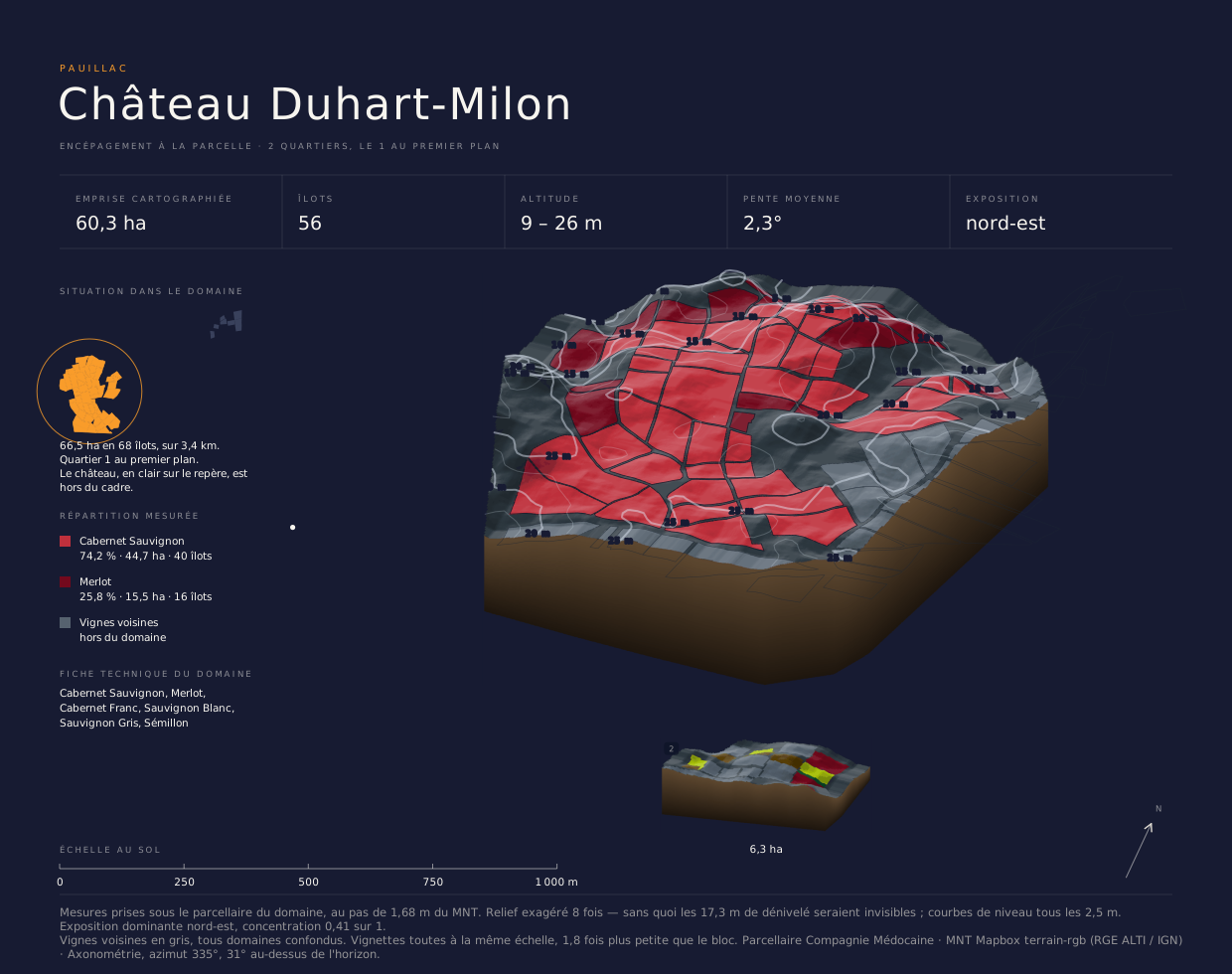
Area under vine at the estate, from its technical sheet — it does not change from one vintage to the next. Each vintage’s blend, by contrast, departs from it: that figures on its own page. The shares published by the estate already total 100% even though it lists other grape varieties: for lack of a consistent breakdown, none are shown here.
In the 3D view: drag to rotate, scroll to zoom, Shift+drag to pan, double-click to reset.
Footprint, parcels and their split are measured on the Compagnie Médocaine’s own parcel survey; elevation, slope and aspect on the Mapbox terrain-rgb digital terrain model, derived from IGN’s RGE ALTI over France. Compare with the blend on the technical sheet, at the top of the page: the two answer different questions.
Why buy it
The only quatrième cru classé in PauillacThe appellation has no other in the 1855 classification.
The Milon hillside, an extension of the CarruadesSeventy-six hectares in a single block, of fine gravel mixed with wind-blown sands over a subsoil of Tertiary limestone.
97/100 from Decanter in 2020Twelve vintages at 95 or above since 2005, never below 93 since 2009.
Every barrel tasted before blendingThe grand vin is selected in December, barrel by barrel; aged with 50% new oak.
The wine
The grand vin of Château Duhart-Milon is often described as a pared-back classic of the Pauillac appellation; it shows a restrained distinction, all in finesse.
Terroir
The vineyard of Château Duhart-Milon lies almost as a single block on the western side of Château Lafite Rothschild, on the Milon slope that extends the Carruades plateau of Lafite. The Château Duhart-Milon estate comprises 76 ha of vines. The soils are fine gravels mixed with aeolian sands over a subsoil of Tertiary limestone. Strict control of yields, hand harvesting and a great deal of work carried out by hand throughout the year.
2025 vintage figures
260,000 bottlesProduction
Alcohol, yield and vine age are those of the 2025 vintage; they vary from year to year. Only the area above stays stable from one vintage to the next.
Drought without any halt in ripening, together with cool nights, gave a legendary vintage: concentrated, with firm tannins and very long aging potential.
“Best score”: the highest score recorded for this wine, with its source. “Character”: the overall reading of the year across the appellation, which an estate may depart from.
An offer on Château Duhart-Milon
Availability, allocations and terms: the Compagnie Médocaine will reply promptly. The estate and vintage are already filled in in the message.
The texts below copy in one click for your product sheets, catalogues and social channels. The printable sheet condenses the whole page onto a single A4 page.
For this vintage, the media library contains: packshots. High-definition packshots, labels, back labels and lifestyle photos are reserved for clients and partners, on the Compagnie Médocaine’s VinCod media library.
Sheet checked on September 21, 2026. Technical data: the estate’s VinCod sheets. Critic scores: sources cited above, with their date. Vintage benchmarks and character: Compagnie Médocaine’s own editorial read. Soils and relief, where shown: the Compagnie Médocaine’s parcel survey and the Mapbox/IGN terrain model.

 Château Haut-Batailley
 Château Grand-Puy-Lacoste
 Château Pédesclaux
 Château Pibran
 Château Pichon Baron
 Les Tourelles de Pichon Baron
 Château Pichon Comtesse
 Château Lynch-Bages
 Château Lafite Rothschild
 Château Mouton Rothschild
 Château Clerc Milon
 Château d'Armailhac
 Château Pontet-Canet