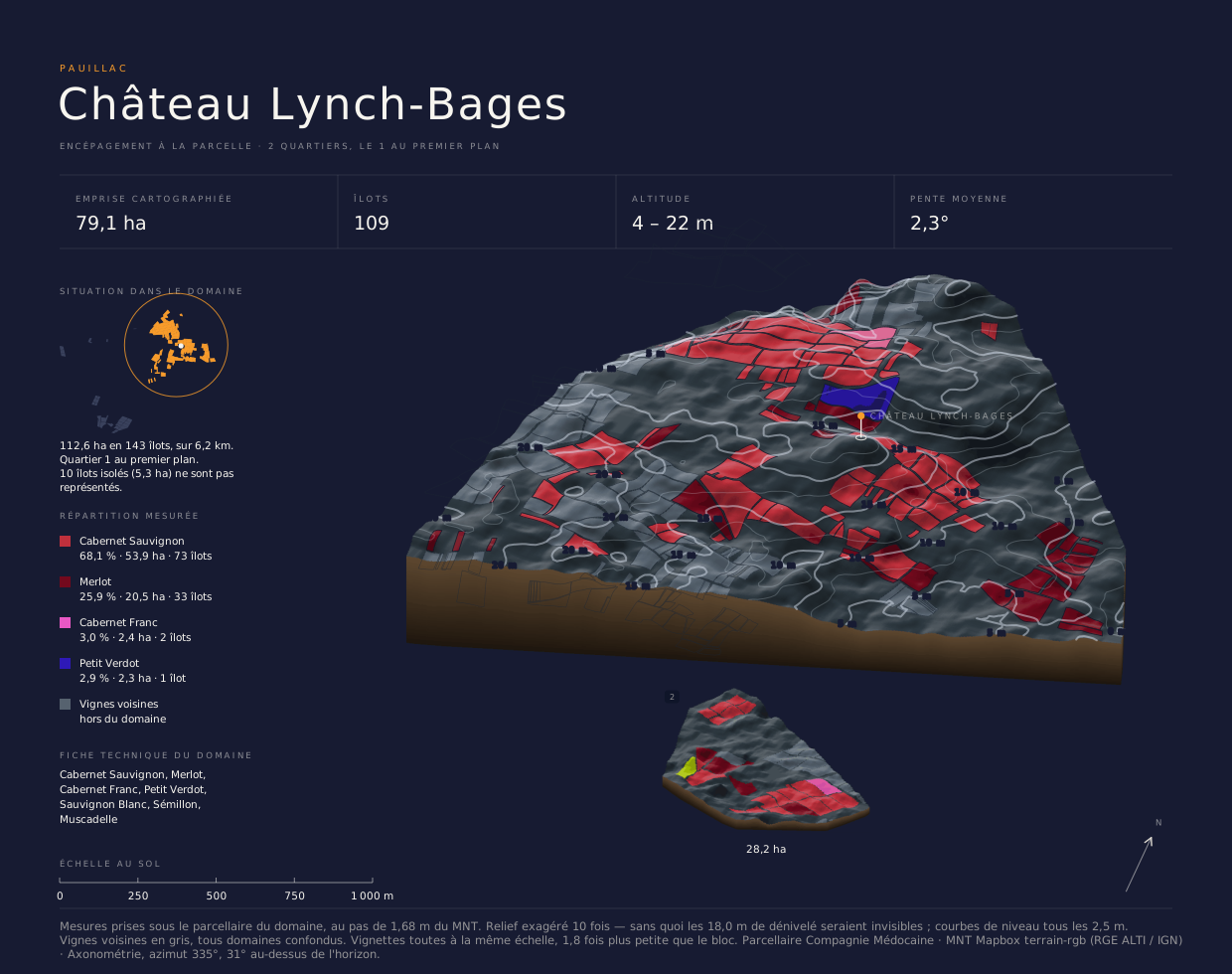
Area under vine at the estate, from its technical sheet — it does not change from one vintage to the next. Each vintage’s blend, by contrast, departs from it: that figures on its own page. The shares published by the estate already total 100% even though it lists other grape varieties: for lack of a consistent breakdown, none are shown here.
In the 3D view: drag to rotate, scroll to zoom, Shift+drag to pan, double-click to reset.
Footprint, parcels and their split are measured on the Compagnie Médocaine’s own parcel survey; elevation, slope and aspect on the Mapbox terrain-rgb digital terrain model, derived from IGN’s RGE ALTI over France. Compare with the blend on the technical sheet, at the top of the page: the two answer different questions.
Why buy it
A vineyard on the gravel rises of PauillacOne hundred and five hectares overlooking the estuary, to the south and southwest of the town.
The Cazes family's cruTechnical director Nicolas Labenne crafts a wine that is generous from its youth and gains complexity with age.
100/100 from Jeb Dunnuck in 2019Sixteen vintages at 95 or above since 2000, never below 94 since 2009.
Eighteen months in barrel, 75% new oakBuilt for ageing of twenty years and more.
The wine
Situated at the gates of Pauillac and overlooking the Gironde estuary, the vineyard of Château Lynch-Bages, whose creation dates back to 1632, extends over a magnificent gravel rise. The Lynch family, of Irish origin, gave it its name and its reputation in the 18th century.
The breeding of Château Lynch-Bages places it in the line of the great Pauillacs. Generous from its youth, it develops with maturity towards greater savour and complexity.
Terroir
Extending over some 100 hectares in the commune of Pauillac, the Lynch-Bages vineyard lies entirely on the soil favoured by the great growths, formed along the estuary by the gravel alluvium of the Médoc. The property occupies the well-defined rises to the south and south-west of the town. The soils of Lynch-Bages are homogeneous, consisting essentially of Günz-era Garonne gravels (early Quaternary) resulting from the slow erosion of the Pyrenees by the Garonne. Highly free-draining and low in silt, these soils of stones and sand store heat during the day and release it at night. Poor and of low fertility, they allow moderate vine growth and encourage deep rooting.
Estate figures
105 haArea
2025 vintage figures
350,000 bottlesProduction
Alcohol, yield and vine age are those of the 2025 vintage; they vary from year to year. Only the area above stays stable from one vintage to the next.
“Best score”: the highest score recorded for this wine, with its source. “Character”: the overall reading of the year across the appellation, which an estate may depart from.
The texts below copy in one click for your product sheets, catalogues and social channels. The printable sheet condenses the whole page onto a single A4 page.
For this vintage, the media library contains: packshots, labels, lifestyle photos. High-definition packshots, labels, back labels and lifestyle photos are reserved for clients and partners, on the Compagnie Médocaine’s VinCod media library.
Sheet checked on September 21, 2026. Technical data: the estate’s VinCod sheets. Critic scores: sources cited above, with their date. Vintage benchmarks and character: Compagnie Médocaine’s own editorial read. Soils and relief, where shown: the Compagnie Médocaine’s parcel survey and the Mapbox/IGN terrain model.
 Château Haut-Batailley
 Château Grand-Puy-Lacoste
 Château Pédesclaux
 Château Pibran
 Château Pichon Baron
 Les Tourelles de Pichon Baron
 Château Pichon Comtesse
 Château Lafite Rothschild
 Château Mouton Rothschild
 Château Duhart-Milon
 Château Clerc Milon
 Château d'Armailhac
 Château Pontet-Canet