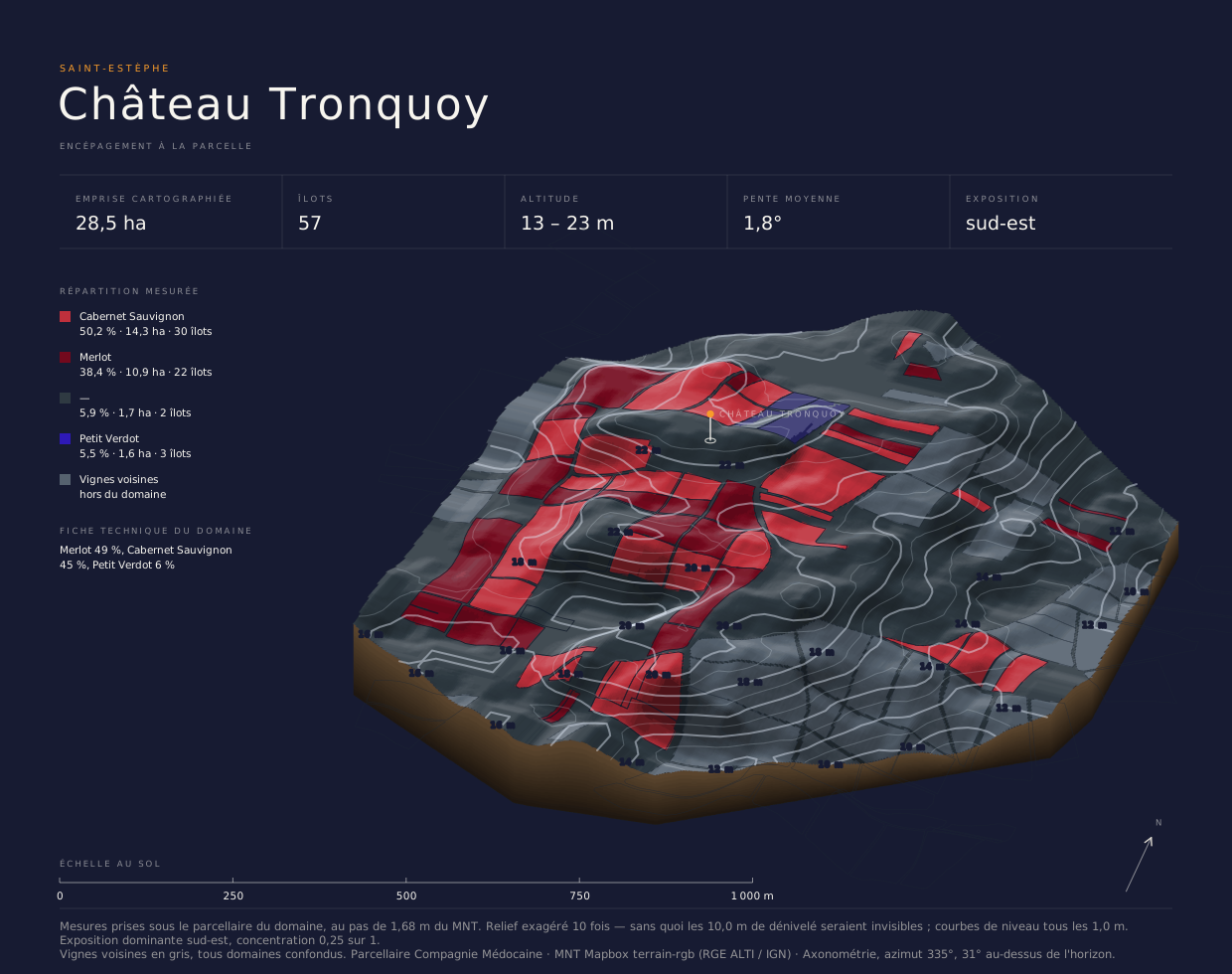
Area under vine at the estate, from its technical sheet — it does not change from one vintage to the next. Each vintage’s blend, by contrast, departs from it: that figures on its own page.
In the 3D view: drag to rotate, scroll to zoom, Shift+drag to pan, double-click to reset.
Footprint, parcels and their split are measured on the Compagnie Médocaine’s own parcel survey; elevation, slope and aspect on the Mapbox terrain-rgb digital terrain model, derived from IGN’s RGE ALTI over France. Compare with the blend on the technical sheet, at the top of the page: the two answer different questions.
Why buy it
Majority merlotFifty-two percent merlot. Among its Saint-Estèphe neighbours, cabernet sauvignon dominates instead.
Eight meters of gravel over clayThe gravel drains, the clay holds water at depth and releases it as the vine needs it.
96/100 from VinousTwo vintages rated, both above 95.
Four grape varieties go into the blend of Tronquoy-Lalande: Merlot, Cabernet Sauvignon, Petit Verdot and Cabernet Franc. Each plays its part and enhances the other three, bringing roundness here, density there, aromas or length elsewhere. In the blend one appreciates finding melted tannins, spicy aromas and those scents of tobacco, resin, blackcurrant and liquorice that form the aromatic identity of Château Tronquoy-Lalande and give it a strongly marked personality.
Terroir
The terroir of Tronquoy-Lalande has a soil ideally suited to the flourishing of Merlot. This variety accounts for the majority of the plantings (52%) and points to a distinctive feature that sets Tronquoy-Lalande apart from its neighbours, where Cabernet Sauvignon dominates. Cabernet Sauvignon follows at 39%, then Petit Verdot (6%) and Cabernet Franc (3%). The vineyard enjoys an ideal exposure, very favourable to the ripening of the grapes. The soil is composed of a mixture of gravel and clay more than 8 metres thick. Gravel has the particular quality of being very free-draining, while clay holds water at depth and releases it according to need. The vineyard lies 23 metres above sea level. The gravel rises formed naturally over the centuries encourage the drainage of rainwater. In addition, the Gironde estuary, very close by, acts as a thermal regulator.
Best critic scores
Vinous962022
Decanter952019
James Suckling952022
Wine Advocate942022
Vintages on record
Vintage
Best score
Vintage character
Technical sheet
2023
—
July mildew followed by a hot September demanded strict selection: fleshy, aromatic wines, more approachable than 2022.
“Best score”: the highest score recorded for this wine, with its source. “Character”: the overall reading of the year across the appellation, which an estate may depart from.
An offer on Château Tronquoy
Availability, allocations and terms: the Compagnie Médocaine will reply promptly. The estate and vintage are already filled in in the message.
The texts below copy in one click for your product sheets, catalogues and social channels. The printable sheet condenses the whole page onto a single A4 page.
For this vintage, the media library contains: packshots. High-definition packshots, labels, back labels and lifestyle photos are reserved for clients and partners, on the Compagnie Médocaine’s VinCod media library.
Sheet checked on September 21, 2026. Technical data: the estate’s VinCod sheets. Critic scores: sources cited above, with their date. Vintage benchmarks and character: Compagnie Médocaine’s own editorial read. Soils and relief, where shown: the Compagnie Médocaine’s parcel survey and the Mapbox/IGN terrain model.


 Château Phélan Ségur
 La Croix Bonis
 Château Cos d'Estournel
 Château Ormes de Pez
 Château Meyney
 Château Laffitte Carcasset
 Château Montrose