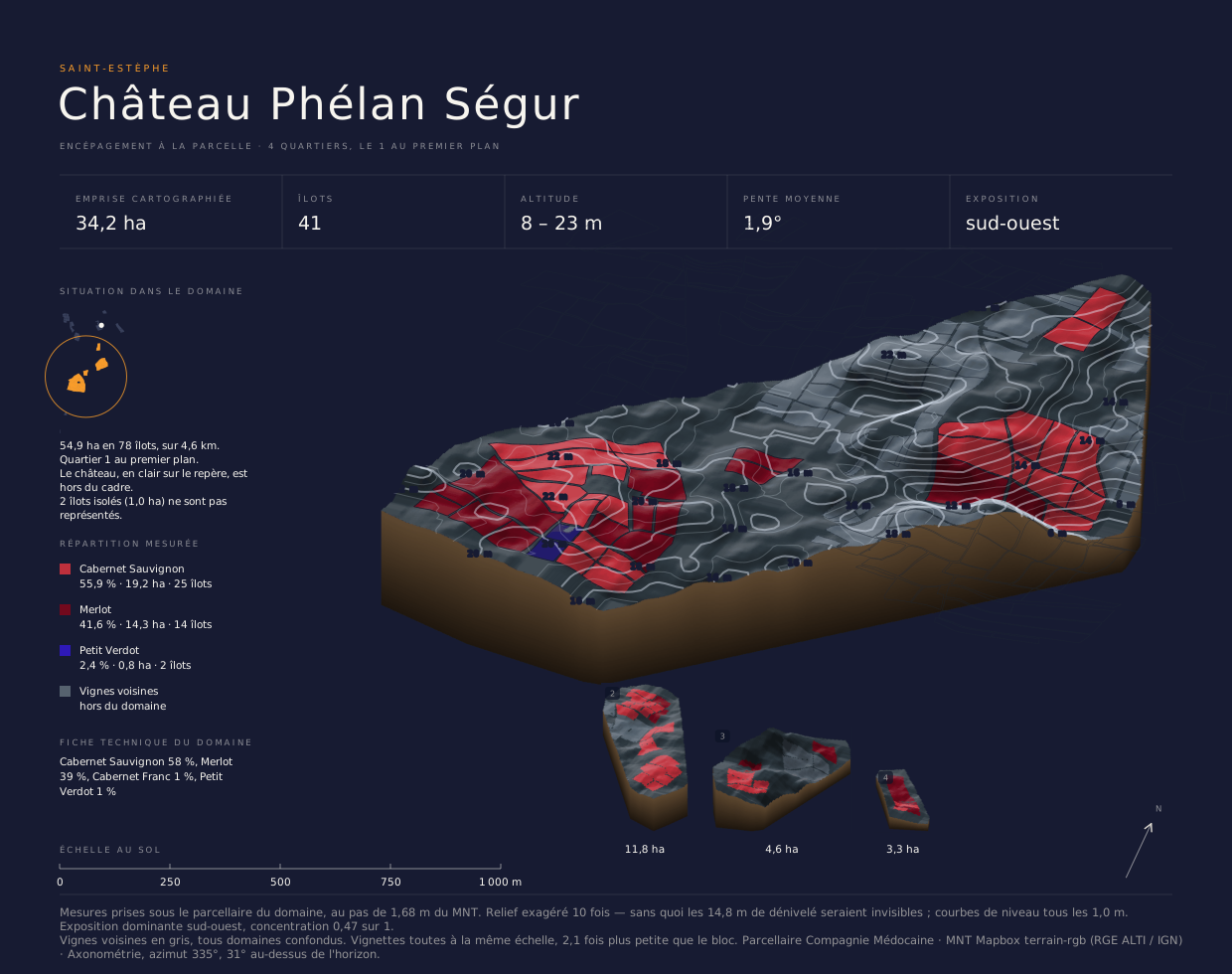
Area under vine at the estate, from its technical sheet — it does not change from one vintage to the next. Each vintage’s blend, by contrast, departs from it: that figures on its own page.
In the 3D view: drag to rotate, scroll to zoom, Shift+drag to pan, double-click to reset.
Footprint, parcels and their split are measured on the Compagnie Médocaine’s own parcel survey; elevation, slope and aspect on the Mapbox terrain-rgb digital terrain model, derived from IGN’s RGE ALTI over France. Compare with the blend on the technical sheet, at the top of the page: the two answer different questions.
Why buy it
The château overlooking the GirondeAt the heart of the village of Saint-Estèphe, in the eastern part of the commune, the part that borders the estuary.
Gravel deposited 650,000 years agoPebbles and gravel coated in clay-rich sand, over a marine limestone formation: it is this deposit that gives Saint-Estèphe its rolling landscape.
97/100 from James Suckling in 2025Eight vintages at 95 or above since 2005, out of twenty-two vintages documented since 1988.
Seventy hectares, vines aged 35 yearsTwenty-nine hectolitres per hectare, sixteen months in barrel with 55% new oak.
The wine
Château Phélan Ségur, in the heart of the village of Saint-Estèphe, has overlooked the Gironde with a certain majesty since the beginning of the 19th century.
Founded by Bernard Phélan, of Irish origin, the property was developed by his son Frank and became Château Phélan Ségur at the beginning of the 20th century. Its barrel cellar and vat room are built into the château, a distinctive architectural feature that is both historic and technical.
Terroir
The terroir of Phélan Ségur, in the eastern part of the commune of Saint-Estèphe bordering the estuary, is made up of gravelly alluvium deposited when the Garonne was a torrential river 650,000 years ago. It consists of pebbles and above all of gravel coated in clayey sands. The varying thickness of these deposits is readily apparent, since it is what determines the rolling landscape of much of the Saint-Estèphe area. The alluvial layers rest on a marine formation of limestone dating from the period when the tip of the Médoc, close to the ocean, lay beneath the sea.
Estate figures
70 haArea
2025 vintage figures
29 hl/haYield
35 yrsVine age
Alcohol, yield and vine age are those of the 2025 vintage; they vary from year to year. Only the area above stays stable from one vintage to the next.
Drought without any halt in ripening, together with cool nights, gave a legendary vintage: concentrated, with firm tannins and very long aging potential.
“Best score”: the highest score recorded for this wine, with its source. “Character”: the overall reading of the year across the appellation, which an estate may depart from.
The texts below copy in one click for your product sheets, catalogues and social channels. The printable sheet condenses the whole page onto a single A4 page.
For this vintage, the media library contains: packshots, lifestyle photos. High-definition packshots, labels, back labels and lifestyle photos are reserved for clients and partners, on the Compagnie Médocaine’s VinCod media library.
Sheet checked on September 21, 2026. Technical data: the estate’s VinCod sheets. Critic scores: sources cited above, with their date. Vintage benchmarks and character: Compagnie Médocaine’s own editorial read. Soils and relief, where shown: the Compagnie Médocaine’s parcel survey and the Mapbox/IGN terrain model.

 La Croix Bonis
 Château Cos d'Estournel
 Château Ormes de Pez
 Château Meyney
 Château Laffitte Carcasset
 Château Montrose
 Château Tronquoy