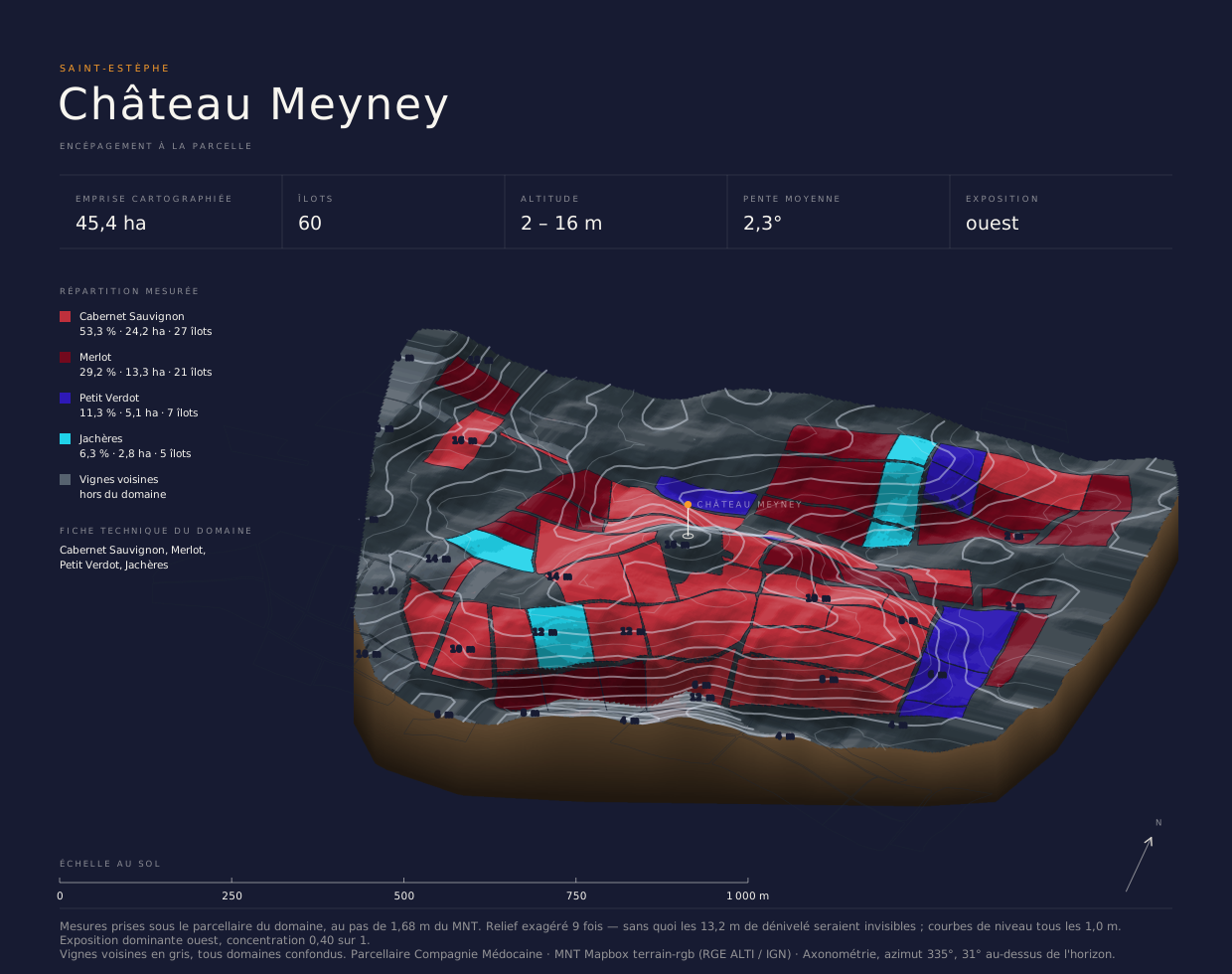
Area under vine at the estate, from its technical sheet — it does not change from one vintage to the next. Each vintage’s blend, by contrast, departs from it: that figures on its own page. The estate does not publish the share of each grape variety: they are listed without proportions.
In the 3D view: drag to rotate, scroll to zoom, Shift+drag to pan, double-click to reset.
Footprint, parcels and their split are measured on the Compagnie Médocaine’s own parcel survey; elevation, slope and aspect on the Mapbox terrain-rgb digital terrain model, derived from IGN’s RGE ALTI over France. Compare with the blend on the technical sheet, at the top of the page: the two answer different questions.
Why buy it
A seam of blue clay, as at PétrusThree metres thick in the subsoil, beneath the siliceous gravel.
Certified sustainable farming and HVEA vineyard of siliceous gravel with perfect drainage.
95/100 from James Suckling in 2025Four vintages at 95 or above since 2018, following the 2004 acquisition and the overhaul of the vineyard.
Forty-three hectares, vines aged 43 yearsCabernet sauvignon at 61%, petit verdot at 10%: a blend that gives the wine breadth and structure.
The wine
The prestigious vineyard of Saint-Estèphe was built up around the Meyney estate. From the middle of the 13th century, this land was tended by Cistercian monks, who made it one of the very first structured wine-growing estates in the northern Médoc.
Long coveted by the great bourgeois families and aristocrats of Bordeaux, the vineyard returned to the hands of the Church through the bequest of Pierre Forthon to the Feuillant Fathers in 1625, the official date of the estate's creation.
The term « château » was attached to Meyney by the Luetkens family in the 19th century, marking an entry into the modern era led by a line of inspired women.
In 1919 the Cordiers, powerful négociants, acquired the property and gave the wines of Meyney an international reputation and distribution.
Since its purchase by the Crédit Agricole group in 2004, the « sleeping beauty » has been reawakened under the leadership of Anne Le Naour as managing director, supported by Boris Diallo and Thomas Hernandez on the technical side.
Terroir
Cabernet Sauvignon draws on a perfectly drained terroir of siliceous gravels and, together with Merlot, Cabernet Franc and Petit Verdot, gives rise to a wine that is ample, fleshy and structured. At maturity it develops the inimitable charm of the great Saint-Estèphes. Across the estate's 43 hectares, the vines, averaging 40 years of age, are made up of Cabernet Sauvignon (61%), Merlot (26%), Cabernet Franc (3%) and Petit Verdot (10%). Besides the Garonne gravels of which it is composed, the vineyard has one distinctive feature: a 3-metre-thick seam of blue clay buried in the subsoil, also found at Pétrus.
2025 vintage figures
43 hl/haYield
43 yrsVine age
Alcohol, yield and vine age are those of the 2025 vintage; they vary from year to year. Only the area above stays stable from one vintage to the next.
“Best score”: the highest score recorded for this wine, with its source. “Character”: the overall reading of the year across the appellation, which an estate may depart from.
The texts below copy in one click for your product sheets, catalogues and social channels. The printable sheet condenses the whole page onto a single A4 page.
For this vintage, the media library contains: packshots. High-definition packshots, labels, back labels and lifestyle photos are reserved for clients and partners, on the Compagnie Médocaine’s VinCod media library.
Sheet checked on September 21, 2026. Technical data: the estate’s VinCod sheets. Critic scores: sources cited above, with their date. Vintage benchmarks and character: Compagnie Médocaine’s own editorial read. Soils and relief, where shown: the Compagnie Médocaine’s parcel survey and the Mapbox/IGN terrain model.

 Château Phélan Ségur
 La Croix Bonis
 Château Cos d'Estournel
 Château Ormes de Pez
 Château Laffitte Carcasset
 Château Montrose
 Château Tronquoy