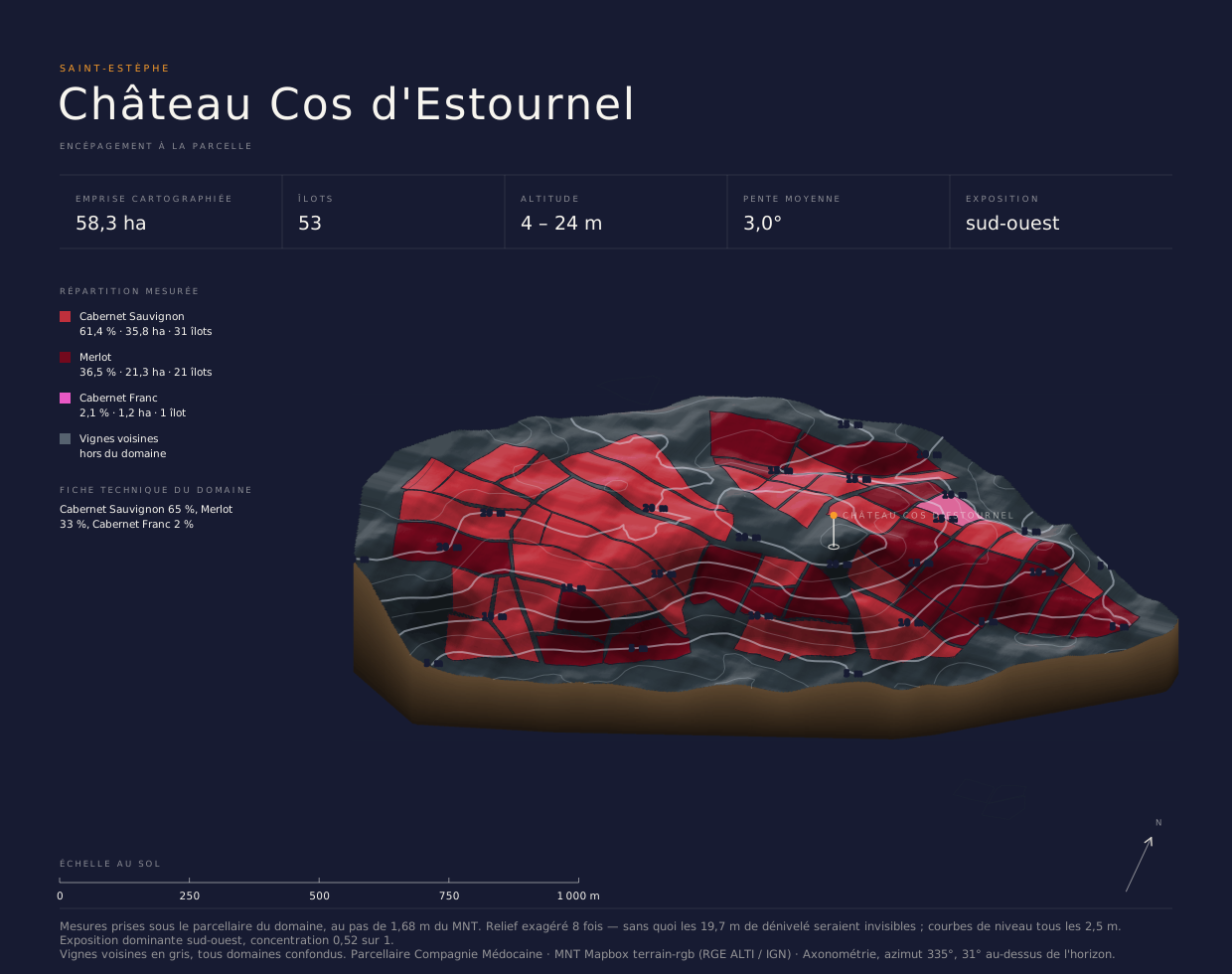
Area under vine at the estate, from its technical sheet — it does not change from one vintage to the next. Each vintage’s blend, by contrast, departs from it: that figures on its own page.
In the 3D view: drag to rotate, scroll to zoom, Shift+drag to pan, double-click to reset.
Footprint, parcels and their split are measured on the Compagnie Médocaine’s own parcel survey; elevation, slope and aspect on the Mapbox terrain-rgb digital terrain model, derived from IGN’s RGE ALTI over France. Compare with the blend on the technical sheet, at the top of the page: the two answer different questions.
Why buy it
"The hill of stones"That is what the name means in old Gascon: an exceptionally deep build-up of Quaternary gravel over Saint-Estèphe's limestone bedrock.
Second Grand Cru Classé in 1855Ninety-one hectares, vines averaging 55 years old, their roots plunging into arid soil.
100/100 from Jeb Dunnuck in 2022Fifteen vintages at 95 or above since 2000, never below 94 since 2009.
A virile elegancePower that excludes neither grace nor suavity.
The wine
In the north of the Médoc, on the hill of Saint-Estèphe. Around a bend in the road, the majestic Pagodas of Cos d'Estournel come into view. The residence of the Maharajah of Saint-Estèphe never fails to surprise. This is a true palace, entirely devoted to wine. Such was the wish of Louis-Gaspard d'Estournel. From the moment he inherited a few hectares of vines in 1791, he never ceased to enlarge his estate and to equip it with the best techniques. Owned since 2000 by Michel Reybier, Cos d'Estournel continues on its path, between audacity and humility.
Terroir
Situated on the edge of the plateau, close to the Gironde estuary, Cos d'Estournel enjoys a privileged geographical position. Benefiting from a maritime climate, the vineyard is sheltered from weather extremes and enjoys gentle natural ventilation. Set on undulating ground made up of deep gravels and clay, Cos d'Estournel benefits from incomparable exposure, with two slopes and a central plateau.
Drought without any halt in ripening, together with cool nights, gave a legendary vintage: concentrated, with firm tannins and very long aging potential.
“Best score”: the highest score recorded for this wine, with its source. “Character”: the overall reading of the year across the appellation, which an estate may depart from.
Other cuvées from the estate
Château Cos d'EstournelBlanc · 2 vintages (2019–2024)
The texts below copy in one click for your product sheets, catalogues and social channels. The printable sheet condenses the whole page onto a single A4 page.
This wine’s visuals are grouped in the media library. High-definition packshots, labels, back labels and lifestyle photos are reserved for clients and partners, on the Compagnie Médocaine’s VinCod media library.
Sheet checked on September 21, 2026. Technical data: the estate’s VinCod sheets. Critic scores: sources cited above, with their date. Vintage benchmarks and character: Compagnie Médocaine’s own editorial read. Soils and relief, where shown: the Compagnie Médocaine’s parcel survey and the Mapbox/IGN terrain model.

 Château Phélan Ségur
 La Croix Bonis
 Château Ormes de Pez
 Château Meyney
 Château Laffitte Carcasset
 Château Montrose
 Château Tronquoy