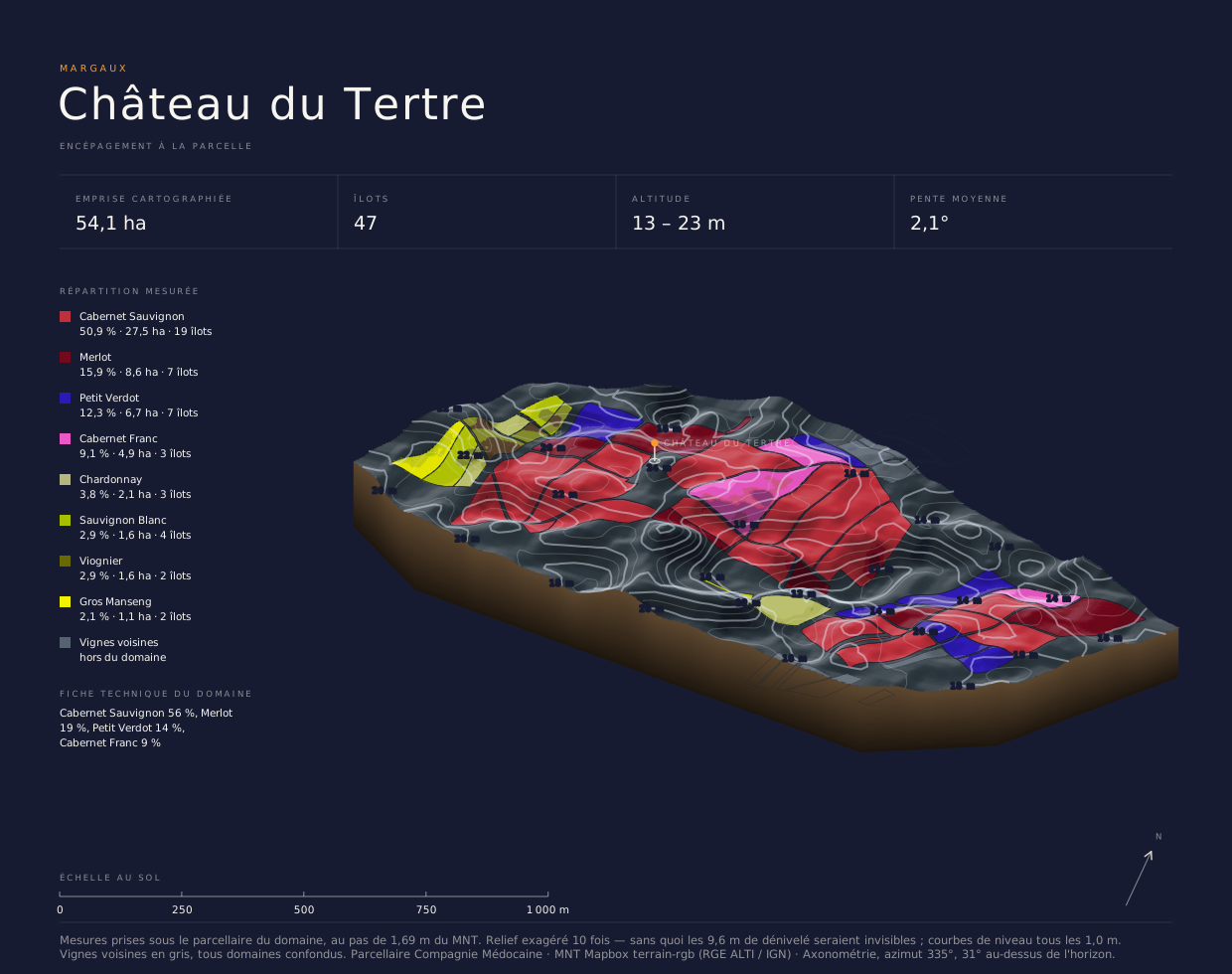
Area under vine at the estate, from its technical sheet — it does not change from one vintage to the next. Each vintage’s blend, by contrast, departs from it: that figures on its own page.
In the 3D view: drag to rotate, scroll to zoom, Shift+drag to pan, double-click to reset.
Footprint, parcels and their split are measured on the Compagnie Médocaine’s own parcel survey; elevation, slope and aspect on the Mapbox terrain-rgb digital terrain model, derived from IGN’s RGE ALTI over France. Compare with the blend on the technical sheet, at the top of the page: the two answer different questions.
Why buy it
One of the highest gravel rises in the MédocThe Margaux terroirs at their highest point: the light there protects the vines from late spring frosts.
Fifth Grand Cru Classé in 1855Fifty-two hectares in a single block.
98/100 from Wine Advocate in 2017Ten vintages at 95 or above since 2015, never below 94 since 2009.
A stream for natural drainageIt separates the two rises and gives the vines their freshness, sheltered from both excess water and drought.
The wine
It was in the 19th century that the wines of Château du Tertre gained worldwide renown, notably through the 1855 classification, which made Château du Tertre a Grand Cru Classé of Margaux.
Terroir
These are the terroirs of Margaux at their highest point, and one of the highest gravel rises in the Médoc. The light and sunshine that bathe the vines protect them from late spring frosts. A stream acting as natural drainage separates the two rises. From it the vine draws the freshness essential to its development, sheltered from excess water as much as from drought.
Estate figures
52 haArea
2025 vintage figures
16 yrsVine age
150,000 bottlesProduction
Alcohol, yield and vine age are those of the 2025 vintage; they vary from year to year. Only the area above stays stable from one vintage to the next.
“Best score”: the highest score recorded for this wine, with its source. “Character”: the overall reading of the year across the appellation, which an estate may depart from.
Other cuvées from the estate
Les Hauts du TertreRouge · 10 vintages (2009–2020)
The texts below copy in one click for your product sheets, catalogues and social channels. The printable sheet condenses the whole page onto a single A4 page.
For this vintage, the media library contains: packshots, labels. High-definition packshots, labels, back labels and lifestyle photos are reserved for clients and partners, on the Compagnie Médocaine’s VinCod media library.
Sheet checked on September 21, 2026. Technical data: the estate’s VinCod sheets. Critic scores: sources cited above, with their date. Vintage benchmarks and character: Compagnie Médocaine’s own editorial read. Soils and relief, where shown: the Compagnie Médocaine’s parcel survey and the Mapbox/IGN terrain model.

 Château Brane Cantenac
 Château Durfort Vivens
 Château d'Issan
 Château Lascombes
 Château Marquis de Terme
 Château Giscours
 Château Rauzan-Ségla
 Château Kirwan