Area under vine at the estate, from its technical sheet — it does not change from one vintage to the next. Each vintage’s blend, by contrast, departs from it: that figures on its own page. The shares published by the estate already total 100% even though it lists other grape varieties: for lack of a consistent breakdown, none are shown here.
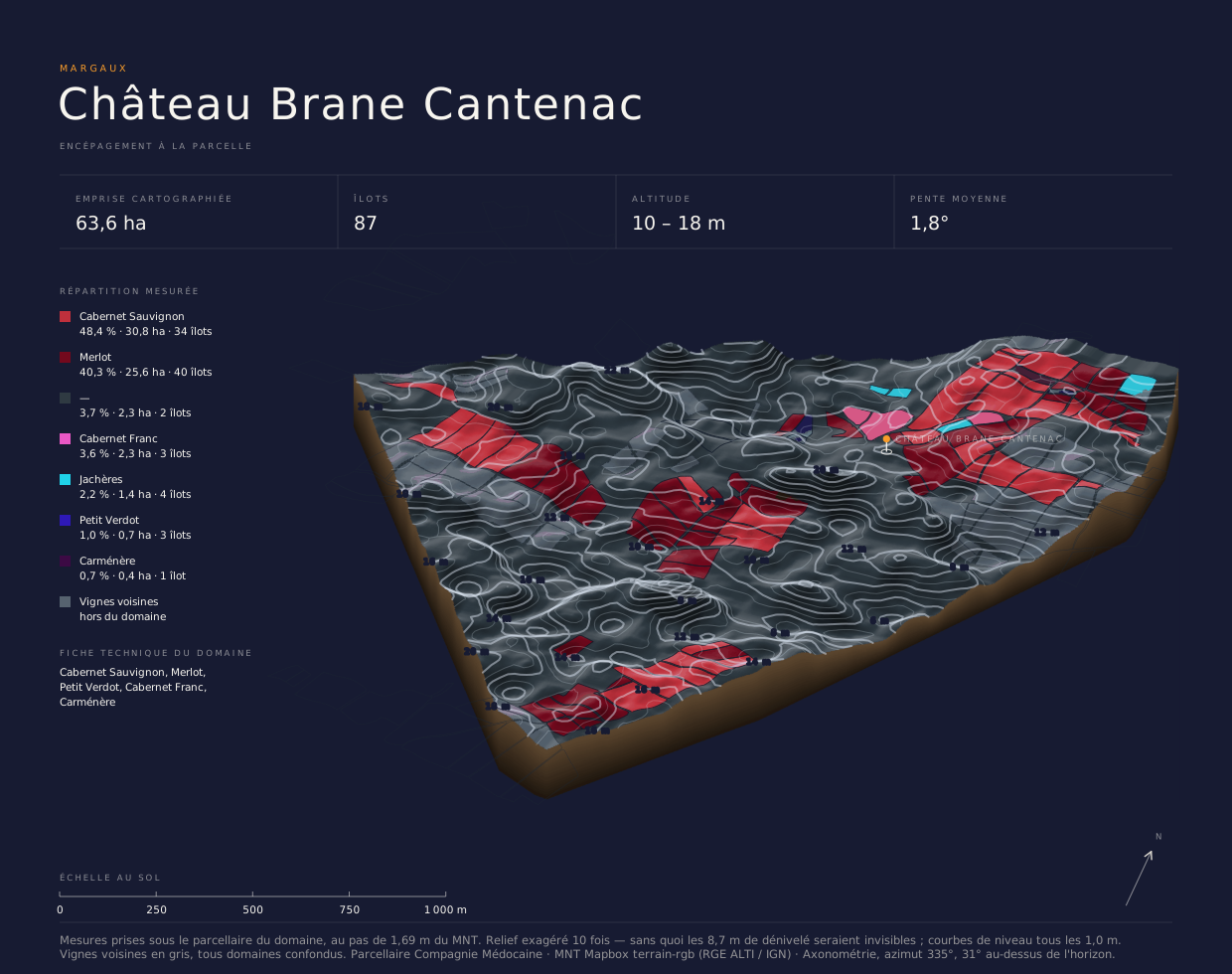
In the 3D view: drag to rotate, scroll to zoom, Shift+drag to pan, double-click to reset.
Footprint, parcels and their split are measured on the Compagnie Médocaine’s own parcel survey; elevation, slope and aspect on the Mapbox terrain-rgb digital terrain model, derived from IGN’s RGE ALTI over France. Compare with the blend on the technical sheet, at the top of the page: the two answer different questions.
Why buy it
"The first of the seconds"Brane's terroir long earned the estate this title: forty-five hectares at its historic heart, unchanged for three centuries.
Second Grand Cru Classé in 1855Henri Lurton has run the estate since 1992, committed to sustainable vineyard management.
99/100 from Jeb Dunnuck in 2022Eleven vintages at 95 or above since 2009, with a floor of 95 over the same period.
Twelve metres of clay-gravelA deep water reserve that the soil's compactness rations: the vine suffers neither from rain nor drought.
The wine
Brane embodies the legacy of a family passion for wine, handed down over 5 generations.
In 1925 Léonce Récapet acquired the property. Since 1992 his great-grandson Henri Lurton has run it with passion, a true visionary and custodian of this exceptional terroir.
In 2022 he passed the property on to his children while retaining its management.
Together they carry on a tradition of excellence, with a sustainable approach that respects nature. Each vintage reflects their philosophy: to create wines that are elegant, balanced and marked by authenticity.
Carried by its history and by the commitment of its craftsmen, Brane-Cantenac appeals through its depth, its refinement and its generosity. A timeless wine, combining tradition and modernity in harmony.
Terroir
Historically recognised as one of the greatest in the Médoc, the terroir of Brane long earned the property the description of first of the seconds. The heart of the property is a 45-hectare block, unchanged for three centuries. The very deep gravel (12 m) has a high clay content. It ensures a sufficient water reserve throughout the year while its compactness limits the amount of water the plant takes up. The water table is very deep here (5 to 6 m), allowing the roots to develop deep down. The upper layers of the soil, sandier, tend to saturate quickly during heavy rain. Much of the water then runs off, thanks to the topography.
2025 vintage figures
32.2 hl/haYield
35 yrsVine age
Alcohol, yield and vine age are those of the 2025 vintage; they vary from year to year. Only the area above stays stable from one vintage to the next.
Drought without any halt in ripening, together with cool nights, gave a legendary vintage: concentrated, with firm tannins and very long aging potential.
“Best score”: the highest score recorded for this wine, with its source. “Character”: the overall reading of the year across the appellation, which an estate may depart from.
The texts below copy in one click for your product sheets, catalogues and social channels. The printable sheet condenses the whole page onto a single A4 page.
For this vintage, the media library contains: packshots, lifestyle photos. High-definition packshots, labels, back labels and lifestyle photos are reserved for clients and partners, on the Compagnie Médocaine’s VinCod media library.
Sheet checked on September 21, 2026. Technical data: the estate’s VinCod sheets. Critic scores: sources cited above, with their date. Vintage benchmarks and character: Compagnie Médocaine’s own editorial read. Soils and relief, where shown: the Compagnie Médocaine’s parcel survey and the Mapbox/IGN terrain model.

 Château Durfort Vivens
 Château d'Issan
 Château Lascombes
 Château Marquis de Terme
 Château du Tertre
 Château Giscours
 Château Rauzan-Ségla
 Château Kirwan