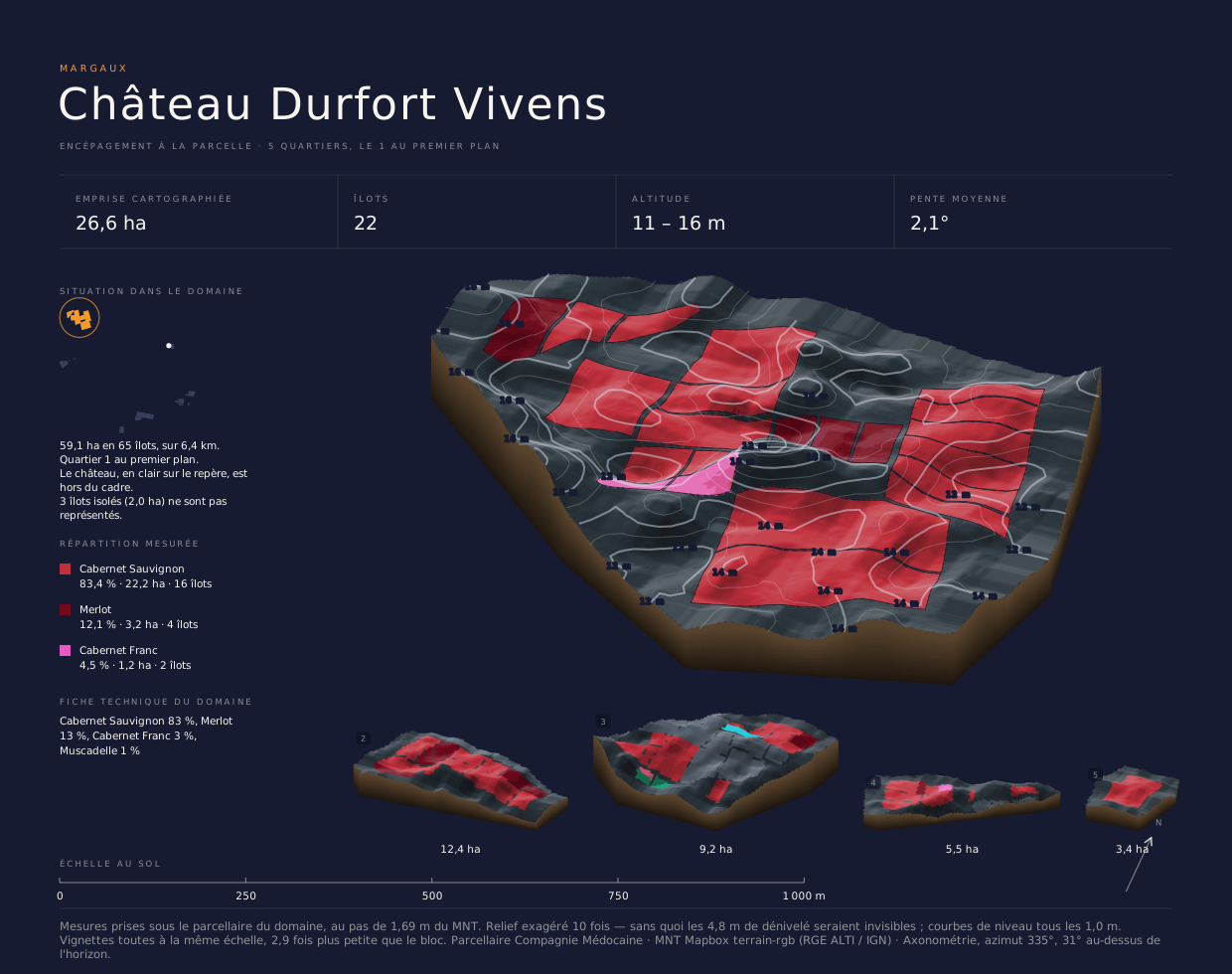
Area under vine at the estate, from its technical sheet — it does not change from one vintage to the next. Each vintage’s blend, by contrast, departs from it: that figures on its own page.
In the 3D view: drag to rotate, scroll to zoom, Shift+drag to pan, double-click to reset.
Footprint, parcels and their split are measured on the Compagnie Médocaine’s own parcel survey; elevation, slope and aspect on the Mapbox terrain-rgb digital terrain model, derived from IGN’s RGE ALTI over France. Compare with the blend on the technical sheet, at the top of the page: the two answer different questions.
Why buy it
Certified organic and biodynamicEighty percent of the vineyard biodynamic from 2012, the rest under integrated production.
Second Grand Cru Classé in 1855Eighty-three percent cabernet sauvignon, an exceptionally high proportion for Margaux.
Sixty-five hectares across three communesMargaux, Cantenac and Soussans, at twenty-five hectolitres per hectare.
Barrels, foudres and amphoraeEighteen months of ageing split between 45% new barrels, 40% foudres and 15% amphorae.
The wine
The 2025 vintage takes its place from the outset in the prestigious line of years ending in “5”. Carried by a mild, dry winter, the vineyard saw an early budbreak on perfectly drained soils, followed by a rapid and even flowering from mid-May. While the yield potential remained limited — a legacy of poor bud fertility in 2024 — the scorching summer favoured a rare concentration, producing small berries of exceptional phenolic richness. The turning point of the vintage came in early September, when welcome rains eased the water stress and brought a new suppleness to the skins. This weather window made it possible to begin a historically early harvest on 4 September, capturing the ideal balance between technological ripeness and aromatic freshness.
Terroir
Situated in the communes of Margaux, Cantenac and Soussans, the Durfort-Vivens vineyard puts down its roots on deep and particularly poor gravel rises. These gravels were deposited by the successive beds of the Garonne in the Quaternary era. This great terroir gives Cabernet Sauvignon an early and optimal ripeness, allowing it to express fully the finesse and silkiness of its tannins, the guarantee of the freshness and elegance characteristic of the great Margaux wines. At Château Durfort-Vivens, the constant search for a natural balance between the vine and its terroir is reflected in traditional cultivation practices. In 2012, 80% of the vineyard was farmed biodynamically and 20% under integrated production
Estate figures
65 haArea
2025 vintage figures
25 hl/haYield
Alcohol, yield and vine age are those of the 2025 vintage; they vary from year to year. Only the area above stays stable from one vintage to the next.
Drought without any halt in ripening, together with cool nights, gave a legendary vintage: concentrated, with firm tannins and very long aging potential.
“Best score”: the highest score recorded for this wine, with its source. “Character”: the overall reading of the year across the appellation, which an estate may depart from.
Other cuvées from the estate
Vivens de Durfort VivensRouge · 12 vintages (2006–2017)
The texts below copy in one click for your product sheets, catalogues and social channels. The printable sheet condenses the whole page onto a single A4 page.
For this vintage, the media library contains: packshots, labels. High-definition packshots, labels, back labels and lifestyle photos are reserved for clients and partners, on the Compagnie Médocaine’s VinCod media library.
Sheet checked on September 21, 2026. Technical data: the estate’s VinCod sheets. Critic scores: sources cited above, with their date. Vintage benchmarks and character: Compagnie Médocaine’s own editorial read. Soils and relief, where shown: the Compagnie Médocaine’s parcel survey and the Mapbox/IGN terrain model.
 Château Brane Cantenac
 Château d'Issan
 Château Lascombes
 Château Marquis de Terme
 Château du Tertre
 Château Giscours
 Château Rauzan-Ségla
 Château Kirwan