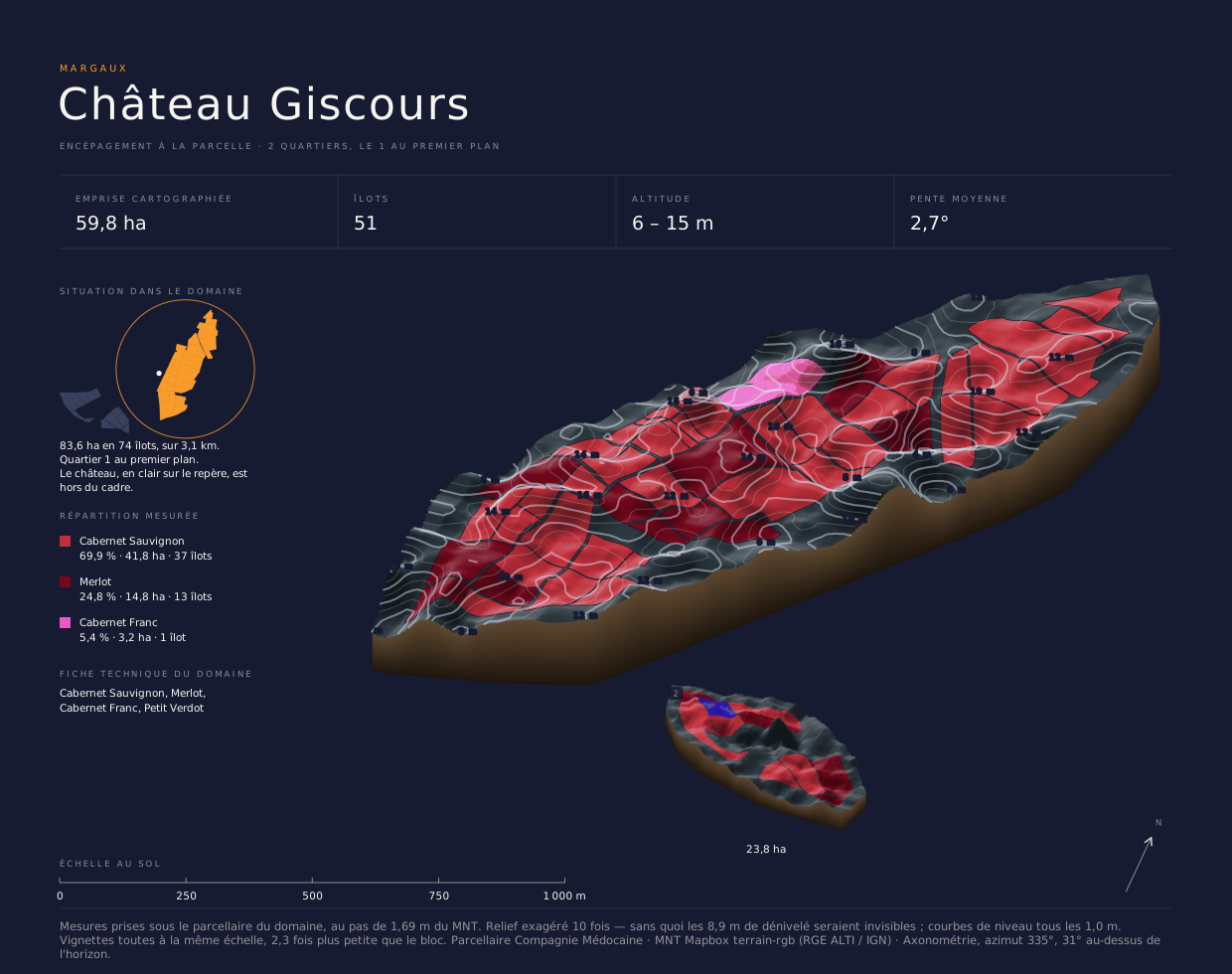
Area under vine at the estate, from its technical sheet — it does not change from one vintage to the next. Each vintage’s blend, by contrast, departs from it: that figures on its own page. The estate does not publish the share of each grape variety: they are listed without proportions.
In the 3D view: drag to rotate, scroll to zoom, Shift+drag to pan, double-click to reset.
Footprint, parcels and their split are measured on the Compagnie Médocaine’s own parcel survey; elevation, slope and aspect on the Mapbox terrain-rgb digital terrain model, derived from IGN’s RGE ALTI over France. Compare with the blend on the technical sheet, at the top of the page: the two answer different questions.
Why buy it
Three gravel rises deposited by the GaronneNinety-five hectares between seventeen and twenty metres in altitude, oriented east-west.
Troisième Grand Cru Classé in 1855All the classicism of a great Margaux: fine tannins, purity, length on the palate.
98/100 from James Suckling in 2025Twelve vintages at 95 or above since 2014, never below 94 since 2009.
Seventeen months in barrel, 50% new oakThe culmination of agronomic and winemaking choices pursued for close to a decade.
The wine
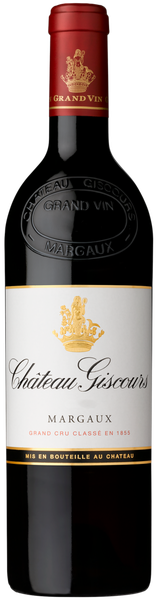
Château Giscours has all the classicism of a great Margaux: finesse of tannins, purity, soft and refined elegance, great length on the palate… To those who know how to wait for it, the wine of Giscours — this intellectual wine, as some connoisseurs describe it — will disclose all its complexity and share its confidences in full.
Terroir
Located within the Margaux appellation, the exceptional terroir of Giscours has all the qualities required to produce a very great wine. Three magnificent gravel rises deposited by the Garonne at the beginning of the Quaternary era are its secret. The gravels that make them up play a crucial role, reflecting the sun’s rays and maintaining a certain temperature at night: ideal conditions for the perfect ripening of the grapes. The topography is just as important: an altitude of some twenty metres for the Petit and Grand Poujeau rises, 17 metres for that of Cantelaude, which stretches its flanks right up to the château itself, with an east-west orientation.
Drought without any halt in ripening, together with cool nights, gave a legendary vintage: concentrated, with firm tannins and very long aging potential.
“Best score”: the highest score recorded for this wine, with its source. “Character”: the overall reading of the year across the appellation, which an estate may depart from.
Other cuvées from the estate
La Sirène de GiscoursRouge · 4 vintages (2010–2025)
The texts below copy in one click for your product sheets, catalogues and social channels. The printable sheet condenses the whole page onto a single A4 page.
For this vintage, the media library contains: packshots, labels, lifestyle photos. High-definition packshots, labels, back labels and lifestyle photos are reserved for clients and partners, on the Compagnie Médocaine’s VinCod media library.
Sheet checked on September 21, 2026. Technical data: the estate’s VinCod sheets. Critic scores: sources cited above, with their date. Vintage benchmarks and character: Compagnie Médocaine’s own editorial read. Soils and relief, where shown: the Compagnie Médocaine’s parcel survey and the Mapbox/IGN terrain model.


 Château Brane Cantenac
 Château Durfort Vivens
 Château d'Issan
 Château Lascombes
 Château Marquis de Terme
 Château du Tertre
 Château Rauzan-Ségla
 Château Kirwan