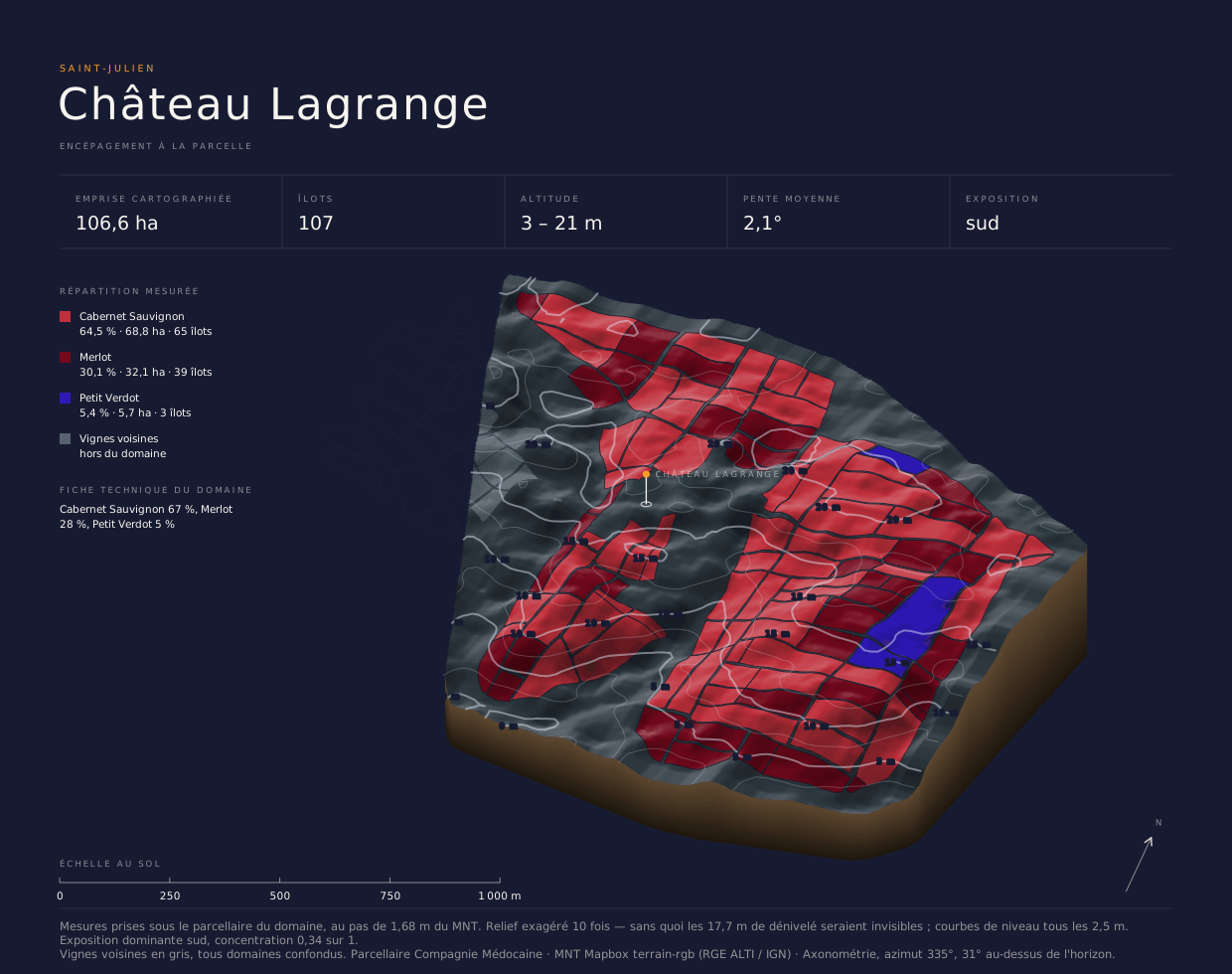
Area under vine at the estate, from its technical sheet — it does not change from one vintage to the next. Each vintage’s blend, by contrast, departs from it: that figures on its own page.
In the 3D view: drag to rotate, scroll to zoom, Shift+drag to pan, double-click to reset.
Footprint, parcels and their split are measured on the Compagnie Médocaine’s own parcel survey; elevation, slope and aspect on the Mapbox terrain-rgb digital terrain model, derived from IGN’s RGE ALTI over France. Compare with the blend on the technical sheet, at the top of the page: the two answer different questions.
Why buy it
One hundred and eight hectares in a single blockAcross two gravel rises running north-south, entirely within the commune of Saint-Julien.
Troisième Grand Cru Classé in 1855Four centuries of Médoc history, and a terroir unchanged since the classification.
96/100 from Wine Advocate in 2025Nine vintages at 95 or above, never below 94 since 2009, across twenty vintages documented.
Twenty-one months of ageingEarly blending from January, fined with egg white in barrel, 50% new oak.
The wine
Carried by four centuries of Médoc history and driven by the uncompromising commitment to quality of its Japanese owners since 1983, Château Lagrange has been able to adapt tradition and embrace innovation in order to express with the greatest precision a terroir unchanged since 1855, bringing out the best in each parcel and each vintage, for wines of great consistency, expressive and harmonious.
Terroir
Lying entirely within the commune of Saint-Julien, the vineyard of Château Lagrange covers 108 ha of red-grape vines in a single block planted on two gravel rises running north-south. The estate has a clay-limestone subsoil and a silica-gravel soil, in a temperate oceanic climate.
Estate figures
108 haArea
2025 vintage figures
45 yrsVine age
150,000 bottlesProduction
Alcohol, yield and vine age are those of the 2025 vintage; they vary from year to year. Only the area above stays stable from one vintage to the next.
Drought without any halt in ripening, together with cool nights, gave a legendary vintage: concentrated, with firm tannins and very long aging potential.
“Best score”: the highest score recorded for this wine, with its source. “Character”: the overall reading of the year across the appellation, which an estate may depart from.
Other cuvées from the estate
Les Fiefs de LagrangeRouge · 14 vintages (2005–2025)
The texts below copy in one click for your product sheets, catalogues and social channels. The printable sheet condenses the whole page onto a single A4 page.
For this vintage, the media library contains: packshots, labels, lifestyle photos. High-definition packshots, labels, back labels and lifestyle photos are reserved for clients and partners, on the Compagnie Médocaine’s VinCod media library.
Sheet checked on September 21, 2026. Technical data: the estate’s VinCod sheets. Critic scores: sources cited above, with their date. Vintage benchmarks and character: Compagnie Médocaine’s own editorial read. Soils and relief, where shown: the Compagnie Médocaine’s parcel survey and the Mapbox/IGN terrain model.


 Château Beychevelle
 Château Branaire-Ducru
 Château Moulin de la Bridane
 Château Léoville Las Cases
 Clos du Marquis