Compagnie Médocaine des Grands Crus Grands crus atlas
Château Branaire-Ducru — Saint-Julien
Saint-Julien · France

Château Branaire-Ducru

Vineyard blend
  • 70 % Cabernet Sauvignon
  • 22 % Merlot
  • 4 % Petit Verdot
  • 4 % Cabernet Franc

Area under vine at the estate, from its technical sheet — it does not change from one vintage to the next. Each vintage’s blend, by contrast, departs from it: that figures on its own page.

Bottle of Château Branaire-Ducru

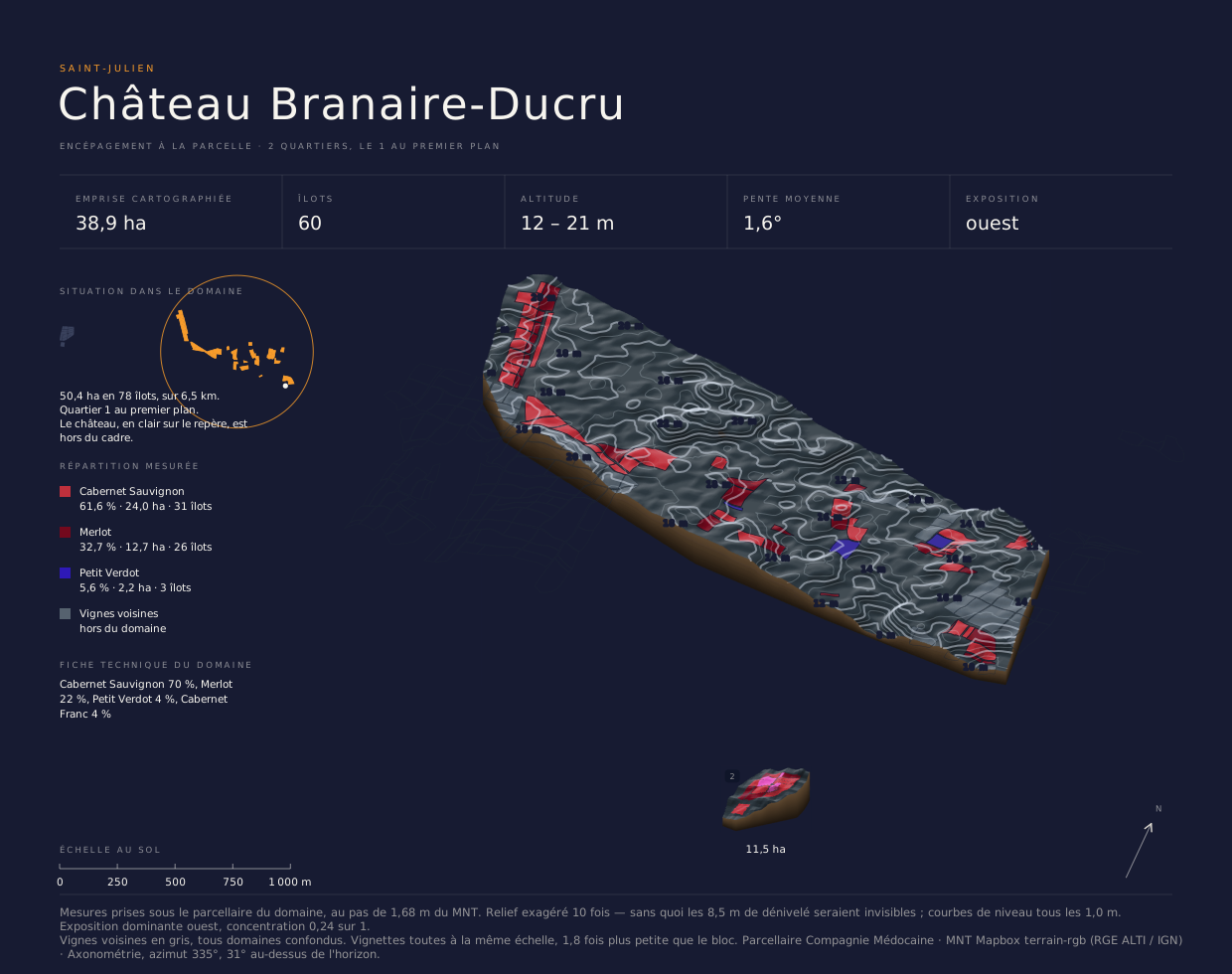
Parcel plate

Château Branaire-Ducru — parcel plate by grape variety

Relief exaggerated ×10 · elevation 3 to 24 m · average slope 1.6°

Enlarge the plateExplore in 3D

In the 3D view: drag to rotate, scroll to zoom, Shift+drag to pan, double-click to reset.

Footprint, parcels and their split are measured on the Compagnie Médocaine’s own parcel survey; elevation, slope and aspect on the Mapbox terrain-rgb digital terrain model, derived from IGN’s RGE ALTI over France. Compare with the blend on the technical sheet, at the top of the page: the two answer different questions.

The wine

Château Branaire-Ducru is one of the 61 prestigious châteaux chosen for the 1855 classification of the Grands Crus. It is known to lovers of the great growths for its consistency and for the elegance of the wine's deep character.

Terroir

The Branaire-Ducru vineyard is made up of several separate parcels, but with a terroir that remains homogeneous, on a very fine gravel rise at Beychevelle. The soil consists mainly of Quaternary gravelly-siliceous alluvium lying on a bed of alios (iron hardpan). The average age of the vineyard is 35 years. The blend at Château Branaire-Ducru is 70% Cabernet Sauvignon, 22% Merlot and 4% each of Petit Verdot and Cabernet Franc. Planting density is 8,000 vines/ha, for a yield of 40 hl/ha. Harvesting is by hand, with rigorous sorting in the vineyard and on sorting tables. Viticulture is conventional.

Estate figures

2025 vintage figures

Alcohol, yield and vine age are those of the 2025 vintage; they vary from year to year. Only the area above stays stable from one vintage to the next.

Best critic scores

Vintages on record

VintageBest scoreVintage characterTechnical sheet
202596-97 James SucklingA dry, bright summer, tempered by cool nights, gave pure, balanced wines, more classic than sun-drenched.fiche · PDF
202493-94 James SucklingA rainy spring and a difficult flowering reduced the crop; the dry October saved fine, light, easy-drinking wines.fiche · PDF
202395 James SucklingJuly mildew followed by a hot September demanded strict selection: fleshy, aromatic wines, more approachable than 2022.
202297 Jeb DunnuckThree heatwaves and extreme drought gave, against all odds, wines of exceptional concentration without harshness — the great sun-drenched year.
202194 Wine AdvocateFrost, mildew, then a cool summer brought back Bordeaux of old: taut, vibrant wines, shorter but elegant.
202096 James SucklingAn early, hot year, with a harvest under pressure: a dense, juicy classic, ripe without heaviness.fiche · PDF
201994-96 Jeb DunnuckA hot end of summer after a rainy spring gave wines that hold ripeness and freshness together; the cabernets shine here.
201896 VinousAfter a spring marked by mildew, the heat concentrated a small crop: rich, ripe wines with great depth of material.
201696 Wine EnthusiastA very wet winter followed by a sun-drenched summer produced a rare balance, combining the depth of great years with genuine freshness.
201595 VinousA hot summer tempered by August rains gave expansive wines, with rounded tannins and generous fruit.fiche · PDF
201393 Wine EnthusiastCoulure, mildew, then rain during the harvest: a light vintage, ready to drink.fiche · PDF
201294 Wine EnthusiastA late cycle closing with rain gave an uneven vintage: the cabernets hold up, the merlots remain taut.fiche · PDF
201194 Wine EnthusiastA scorching spring followed by a wet August turned the seasons upside down: classic wines, shorter but true to type.fiche · PDF
2010A dry summer and cool nights concentrated small berries: a benchmark vintage, with dense tannins and a thirty-year aging potential.fiche · PDF
2009A sun-drenched season from start to finish gave opulent, fleshy wines, immediately appealing yet built for the cellar.fiche · PDF
2008A bright late season saved a cool summer: wines of unexpected freshness and aromatic precision.fiche · PDF
2007A cool, wet summer demanded strict selection: light, delicious wines, to be drunk young.fiche · PDF
2006Rain at véraison followed by a dry September gave classic, balanced wines with fine freshness, without the density of 2005.fiche · PDF
2005Drought without any halt in ripening, together with cool nights, gave a legendary vintage: concentrated, with firm tannins and very long aging potential.fiche · PDF
2004High yields and a dry September gave a classic, unexaggerated vintage, straightforward, now at its peak.fiche · PDF
2003The historic heatwave halted ripening in young vines: very ripe, low-acid wines, at their best in Saint-Estèphe, where the clays held on to freshness.fiche · PDF

“Best score”: the highest score recorded for this wine, with its source. “Character”: the overall reading of the year across the appellation, which an estate may depart from.

Other cuvées from the estate

An offer on Château Branaire-Ducru

Availability, allocations and terms: the Compagnie Médocaine will reply promptly. The estate and vintage are already filled in in the message.

Texts and documents 2025

The texts below copy in one click for your product sheets, catalogues and social channels. The printable sheet condenses the whole page onto a single A4 page.

Technical sheet (PDF)
Visuals

For this vintage, the media library contains: packshots, lifestyle photos. High-definition packshots, labels, back labels and lifestyle photos are reserved for clients and partners, on the Compagnie Médocaine’s VinCod media library.

Other châteaux in Saint-Julien

Sheet checked on September 21, 2026. Technical data: the estate’s VinCod sheets. Critic scores: sources cited above, with their date. Vintage benchmarks and character: Compagnie Médocaine’s own editorial read. Soils and relief, where shown: the Compagnie Médocaine’s parcel survey and the Mapbox/IGN terrain model.