Château Suduiraut
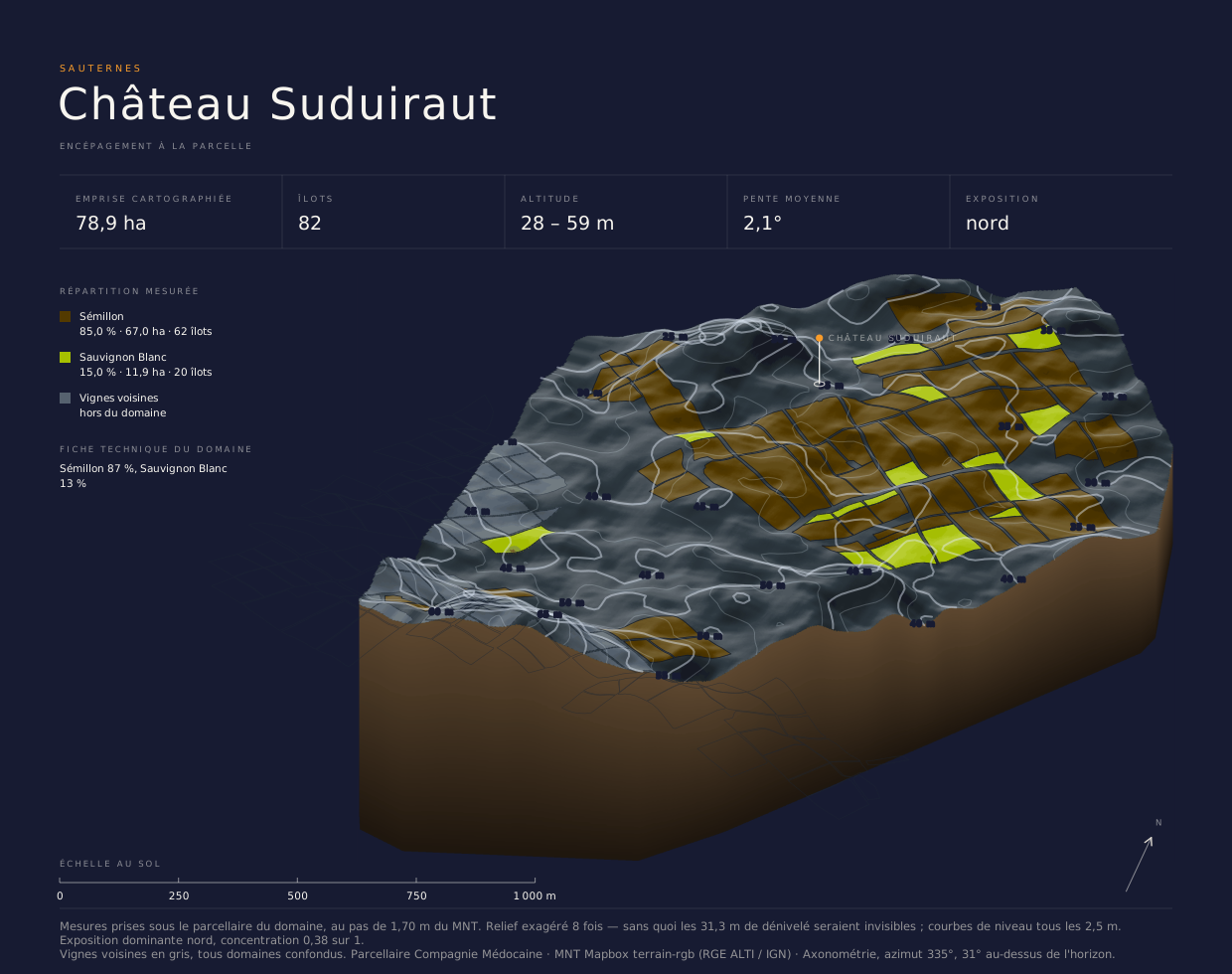
- 87 % Sémillon
- 13 % Sauvignon Blanc
Area under vine at the estate, from its technical sheet — it does not change from one vintage to the next. Each vintage’s blend, by contrast, departs from it: that figures on its own page.


Area under vine at the estate, from its technical sheet — it does not change from one vintage to the next. Each vintage’s blend, by contrast, departs from it: that figures on its own page.

Relief exaggerated ×8 · elevation 21 to 75 m · average slope 2.1°
Enlarge the plateExplore in 3D
In the 3D view: drag to rotate, scroll to zoom, Shift+drag to pan, double-click to reset.
Footprint, parcels and their split are measured on the Compagnie Médocaine’s own parcel survey; elevation, slope and aspect on the Mapbox terrain-rgb digital terrain model, derived from IGN’s RGE ALTI over France. Compare with the blend on the technical sheet, at the top of the page: the two answer different questions.
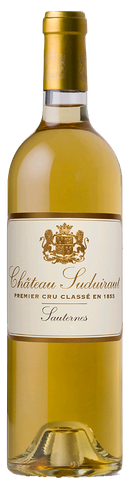
Château Suduiraut, Premier Cru Classé in 1855, comes from a selection of the estate's most prestigious terroirs. Made entirely to measure, this wine reveals an extraordinary complexity and great beauty in its sun-coloured robe, which turns to amber as it ages. Of remarkable longevity, it combines with harmony and power aromas of flowers, fruit and candied, roasted grapes.
The Sauternes terroir covers 2,200 hectares 40 km from Bordeaux, between the left bank of the Garonne and the Landes forest. The Sauternes appellation takes in the communes of Sauternes, Bommes, Fargues, Preignac and Barsac. The Suduiraut estate extends over 200 hectares, of which 92 hectares are under vine, on soils composed essentially of sandy-clay gravel. The region's microclimate brings sunny, warm autumn afternoons following the morning mists. This causes, or at least stimulates, the appearance on the grapes of Botrytis cinerea, or noble rot.
Alcohol, yield and vine age are those of the 2025 vintage; they vary from year to year. Only the area above stays stable from one vintage to the next.
| Vintage | Best score | Vintage character | Technical sheet |
|---|---|---|---|
| 2025 | 97-98 James Suckling | Regular morning mists in a dry autumn brought back honest botrytis: clean, nicely taut wines. | fiche · PDF |
| 2024 | 95-97 Jeb Dunnuck | A rainy autumn reduced the crop to very little: the wines that were made are fine and light. | fiche · PDF |
| 2023 | 100 Vinous | A mild, humid autumn allowed for long picking passes: balanced wines, carried by freshness. | fiche · PDF |
| 2021 | 100 James Suckling | A cool autumn offered ideal botrytis: taut, pure sweet wines, in the style of the great classic years. | fiche · PDF |
| 2018 | 97-98 James Suckling | After the mildew, the warm autumn gave rapid botrytis: rich, generous wines, a touch less chiseled. | fiche · PDF |
| 2017 | 97-98 James Suckling | The April frost cost part of the crop: the rest is uneven, sound on the great terroirs. | fiche · PDF |
| 2016 | 97 Vinous | Late botrytis in a dry autumn gave balanced wines, on candied citrus more than on roasted notes. | fiche · PDF |
| 2015 | 99 Jeb Dunnuck | A dry September curbed botrytis: rich, sun-drenched wines, broader than taut. | fiche · PDF |
| 2014 | 96 Vinous | A luminous late season allowed for calm picking passes in October: clean, fresh, perfectly drawn wines. | fiche · PDF |
| 2013 | 97 James Suckling | Impossible for the reds, the 2013 autumn was ideal for botrytis: precise, radiant sweet wines. | fiche · PDF |
| 2011 | 95-96 James Suckling | Early, perfectly mastered botrytis gave taut, thoroughbred wines, already held to be legendary. | fiche · PDF |
| 2010 | 99 Jeb Dunnuck | Slow, steady botrytis gave wines of remarkable purity, more taut than 2009. | fiche · PDF |
| 2009 | 98-99 James Suckling | An ideal autumn after a hot summer gave opulent, complex sweet wines, capable of holding for several decades. | fiche · PDF |
| 2008 | 94 Wine Advocate | Botrytis that only took hold in November gave lively, thoroughbred wines, harvested very late. | fiche · PDF |
| 2007 | 97 Wine Enthusiast | A divine autumn for botrytis gave the great vintage of the sweet wines: precise, complex, of rare freshness. | fiche · PDF |
| 2006 | 95 Wine Advocate | A rainy September called for selective picking passes: balanced, clean wines, without excess liqueur. | fiche · PDF |
| 2005 | 97 James Suckling | Perfect noble rot in a dry autumn gave a splendid tension between liqueur and acidity. | fiche · PDF |
| 2004 | — | A cool autumn produced only modest botrytis: light, fresh sweet wines, to be drunk young. | fiche · PDF |
| 2003 | — | The heatwave kept botrytis from taking hold: wines candied by passerillage, rich and powerful rather than roasted. | fiche · PDF |
| 2002 | 92 Wine Advocate | Botrytis arrived late, in October, giving taut, precise wines, more lithe than rich. | fiche · PDF |
| 2001 | 95 Vinous | The perfect autumn of 2001 remains the modern benchmark: liqueur, acidity and complexity here are in absolute balance. | fiche · PDF |
| 1999 | — | Rapid botrytis in a humid autumn gave fine, supple wines, to be drunk without too much delay. | fiche · PDF |
| 1997 | — | A long autumn allowed for repeated picking passes: pure, elegant wines of fine freshness. | fiche · PDF |
| 1990 | — | Morning mists and afternoon sun throughout the autumn: the 1988-1989-1990 trilogy closes with the most complete of the three. | fiche · PDF |
| 1989 | — | Record heat brought on early botrytis: powerful, roasted sweet wines, very rich in liqueur. | fiche · PDF |
| 1982 | — | The warm autumn hindered the onset of botrytis: an uneven vintage, rich but lacking the tension of the great years. | fiche · PDF |
| 1970 | — | Late but clean botrytis gave well-balanced sweet wines, less powerful than the great years but with fine aging potential. | fiche · PDF |
| 1959 | — | A mild, misty autumn gave perfect noble rot: a legendary vintage, still very much alive. | fiche · PDF |
“Best score”: the highest score recorded for this wine, with its source. “Character”: the overall reading of the year across the appellation, which an estate may depart from.
Availability, allocations and terms: the Compagnie Médocaine will reply promptly. The estate and vintage are already filled in in the message.
The texts below copy in one click for your product sheets, catalogues and social channels. The printable sheet condenses the whole page onto a single A4 page.
For this vintage, the media library contains: packshots, labels. High-definition packshots, labels, back labels and lifestyle photos are reserved for clients and partners, on the Compagnie Médocaine’s VinCod media library.
Sheet checked on September 21, 2026. Technical data: the estate’s VinCod sheets. Critic scores: sources cited above, with their date. Vintage benchmarks and character: Compagnie Médocaine’s own editorial read. Soils and relief, where shown: the Compagnie Médocaine’s parcel survey and the Mapbox/IGN terrain model.