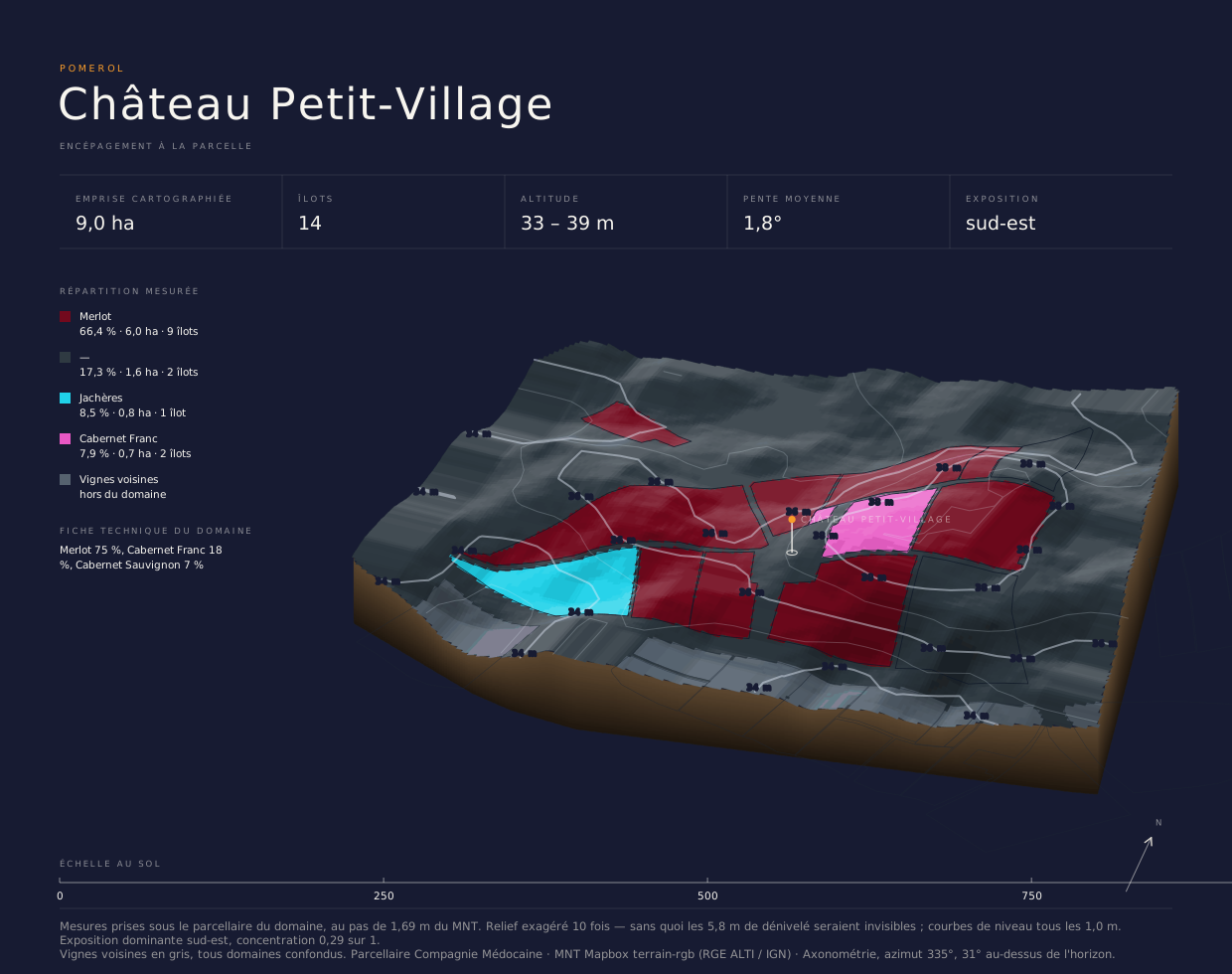
Area under vine at the estate, from its technical sheet — it does not change from one vintage to the next. Each vintage’s blend, by contrast, departs from it: that figures on its own page.
In the 3D view: drag to rotate, scroll to zoom, Shift+drag to pan, double-click to reset.
Footprint, parcels and their split are measured on the Compagnie Médocaine’s own parcel survey; elevation, slope and aspect on the Mapbox terrain-rgb digital terrain model, derived from IGN’s RGE ALTI over France. Compare with the blend on the technical sheet, at the top of the page: the two answer different questions.
Why buy it
Certified Organic FarmingTen and a half hectares in a single triangular block, at the heart of the Pomerol plateau.
Vines aged fifty-three yearsSixteen hectolitres per hectare, on deep gravel over iron pan.
97/100 from James Suckling in 2025Thirteen vintages at 95 or above since 2011, out of nineteen vintages documented since 1995.
One grape variety per plotMerlot for flesh, cabernet franc and cabernet sauvignon for structure: each plot is planted according to its soil.
The wine
The wines of Château Petit-Village, supple, powerful and harmonious, have the richness and incomparable finesse of the great Pomerols.
Terroir
Château Le Petit-Village lies at the heart of Pomerol, on a magnificent clay-gravel plateau. It is a single-block vineyard of 10.5 hectares forming a triangle. Its terroir is composed of deep gravels coated with light sandy clays over a subsoil of alios known as crasse de fer, characteristic of the great wines of Pomerol. Every terroir has a grape variety that remains true to it. At Château Petit-Village, each plot, with its own personality, is planted with the variety suited to it. Merlot predominates on the property (75%): it provides the flesh of the wine and gives it its velvety texture, its roundness and its generosity. To this are added Cabernet Franc (18%) and Cabernet Sauvignon (7%), varieties essential for structure and complexity.
Estate figures
10.5 haArea
2025 vintage figures
13 % vol.Alcohol
16 hl/haYield
53 yrsVine age
Alcohol, yield and vine age are those of the 2025 vintage; they vary from year to year. Only the area above stays stable from one vintage to the next.
“Best score”: the highest score recorded for this wine, with its source. “Character”: the overall reading of the year across the appellation, which an estate may depart from.
Other cuvées from the estate
Le Jardin de Petit-VillageRouge · 2 vintages (2018–2019)
The texts below copy in one click for your product sheets, catalogues and social channels. The printable sheet condenses the whole page onto a single A4 page.
For this vintage, the media library contains: packshots, labels, lifestyle photos. High-definition packshots, labels, back labels and lifestyle photos are reserved for clients and partners, on the Compagnie Médocaine’s VinCod media library.
Sheet checked on September 21, 2026. Technical data: the estate’s VinCod sheets. Critic scores: sources cited above, with their date. Vintage benchmarks and character: Compagnie Médocaine’s own editorial read. Soils and relief, where shown: the Compagnie Médocaine’s parcel survey and the Mapbox/IGN terrain model.

 Château Beauregard
 Château La Conseillante
 Château Nénin
 Château L'Évangile
 Château Gazin