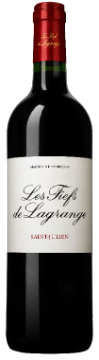
Saint-Julien · vintage 2023
Château Lagrange 2023
Ageing potential5 to 10 years, 10 to 15 years, more than 15 years
 Grands crus atlas
Ageing potential5 to 10 years, 10 to 15 years, more than 15 years
Vintage benchmark: 91/100 (appellation benchmark, not a score for this wine)
Vintage character: July mildew followed by a hot September demanded strict selection: fleshy, aromatic wines, more approachable than 2022.
Overall reading of the year’s season across Saint-Julien. An estate can depart from it sharply, in frost or hail years, where two neighbours did not make the same vintage. What this particular wine actually gave is on its technical sheet and in the scores above.
On the nose, notes of fresh fruit dominate, such as blackcurrant, morello cherry and licorice. The press wines, essential to the making of a great wine, are sumptuous. They give the wines the third dimension necessary to stand the test of time. A significant selection, with 42% of the Château Lagrange produced going into the blend, allows us to guarantee a wine of irreproachable quality. If for some the challenge for this magnificent 2023 will be to exist alongside the exceptional 2022, for us it remains a remarkable vintage in many respects, one that celebrates, in the finest way, 40 years under the stewardship of our Japanese owner.
Shares for this vintage, as recorded on the 2023 technical sheet. The vineyard itself is planted with 67 % cabernet sauvignon, 28 % merlot, 5 % petit verdot — a vintage blend departs from the area under vine as the year dictates.
Parcel and intra-parcel selection
102 temperature-controlled stainless steel vats for 103 vine parcels
Variable vat capacity: from 36 to 220 hl
Lots classified by grape variety, vine age, terroir and
grape ripeness
Vinification at 2628
°C for 18 to 25 days
Moderate daily pump-over, or rack-and-return, or punching down
Malolactic fermentation by co-inoculation
Early blending of the grape varieties in January
Ageing for 21 months
50% new barrels
Fining with egg whites in barrel
Final blend before bottling
Lying entirely within the commune of Saint-Julien, the vineyard of Château Lagrange covers 108 ha of red-grape vines in a single block planted on two gravel rises running north-south. The estate has a clay-limestone subsoil and a silica-gravel soil, in a temperate oceanic climate.
Availability, allocations and terms: the Compagnie Médocaine will reply promptly. The estate and vintage are already filled in in the message.
The texts below copy in one click for your product sheets, catalogues and social channels. The printable sheet condenses the whole page onto a single A4 page.
For this vintage, the media library contains: packshots, labels, lifestyle photos. High-definition packshots, labels, back labels and lifestyle photos are reserved for clients and partners, on the Compagnie Médocaine’s VinCod media library.
Sheet checked on September 21, 2026. Technical data: the estate’s VinCod sheets. Critic scores: sources cited above, with their date. Vintage benchmarks and character: Compagnie Médocaine’s own editorial read. Soils and relief, where shown: the Compagnie Médocaine’s parcel survey and the Mapbox/IGN terrain model.