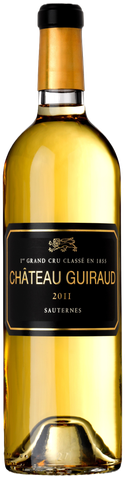
Sauternes · vintage 2010
Château Guiraud 2010
Ageing potential20+ years
 Grands crus atlas
Ageing potential20+ years
Vintage benchmark: 95/100 (appellation benchmark, not a score for this wine)
Vintage character: Slow, steady botrytis gave wines of remarkable purity, more taut than 2009.
Overall reading of the year’s season across Sauternes. An estate can depart from it sharply, in frost or hail years, where two neighbours did not make the same vintage. What this particular wine actually gave is on its technical sheet and in the scores above.
This vintage is simply magnificent. With a good yield, we produced a powerful, very aromatic wine. The aromas are intense: hawthorn, fresh fruit and a touch of mint characterize this vintage. The mouthfeel is ample, soft and sustained. The invigorating side of botrytis is amplified by its great freshness. The palate confirms the nose: the aromas are as if crystallized with precision and purity. The wine is long but never heavy on sugar: the magic of natural sugars enhanced by botrytis works...
Shares for this vintage, as recorded on the 2010 technical sheet. The vineyard itself is planted with sémillon, sauvignon blanc, sauvignon gris, muscadelle — a vintage blend departs from the area under vine as the year dictates.
The fermentation and ageing carried out in barrels take advantage of the beneficial effects of contact between the wine and the wood by the extraction of certain organoleptic characters from the oak thanks to the action of the yeasts which will mix with the wine, also providing a certain finesse.
Depending on the vintage, ageing on lees for 3 to 6 months is practiced with regular stirring, then regular racking is carried out every 3 months.
Situated 45 km south of Bordeaux on the left bank of the Garonne, Château Guiraud, with an area of 128 ha, has among its distinctive features that of lying entirely within the commune of Sauternes. The climate of the Sauternes appellation is oceanic. Winters there are mild and damp; spring, also damp, is temperate. Summers are moderately warm and give the vine a gradual ripening. It is in autumn that the weather conditions differ from those of a normal oceanic climate. The Sauternes district then comes under the influence of a particular microclimate, favouring the development of a microscopic fungus, botrytis cinerea or noble rot, without which Sauternes would not exist.
Availability, allocations and terms: the Compagnie Médocaine will reply promptly. The estate and vintage are already filled in in the message.
The texts below copy in one click for your product sheets, catalogues and social channels. The printable sheet condenses the whole page onto a single A4 page.
For this vintage, the media library contains: packshots, labels, back labels. High-definition packshots, labels, back labels and lifestyle photos are reserved for clients and partners, on the Compagnie Médocaine’s VinCod media library.
Sheet checked on September 21, 2026. Technical data: the estate’s VinCod sheets. Critic scores: sources cited above, with their date. Vintage benchmarks and character: Compagnie Médocaine’s own editorial read. Soils and relief, where shown: the Compagnie Médocaine’s parcel survey and the Mapbox/IGN terrain model.