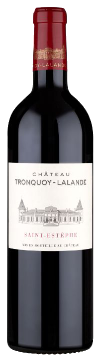
Saint-Estèphe · vintage 2018
 Grands crus atlas
Vintage benchmark: 95/100 (appellation benchmark, not a score for this wine)
Vintage character: After a spring marked by mildew, the heat concentrated a small crop: rich, ripe wines with great depth of material.
Overall reading of the year’s season across Saint-Estèphe. An estate can depart from it sharply, in frost or hail years, where two neighbours did not make the same vintage. What this particular wine actually gave is on its technical sheet and in the scores above.
The color, dark ruby, is deep and intense.
The nose reveals fine notes of black fruit (blackcurrant, blackberry) accompanied by spicy notes and a discreet oakiness.
The palate is broad and of fine aromatic complexity. The tannins are powerful yet silky. The long finish, slightly saline, is marked by fine balance.
2018 is a very fine vintage that reveals the full richness of the terroir of Château Tronquoy-Lalande.
Shares for this vintage, as recorded on the 2018 technical sheet. The vineyard itself is planted with 49 % merlot, 45 % cabernet sauvignon, 6 % petit verdot — a vintage blend departs from the area under vine as the year dictates.
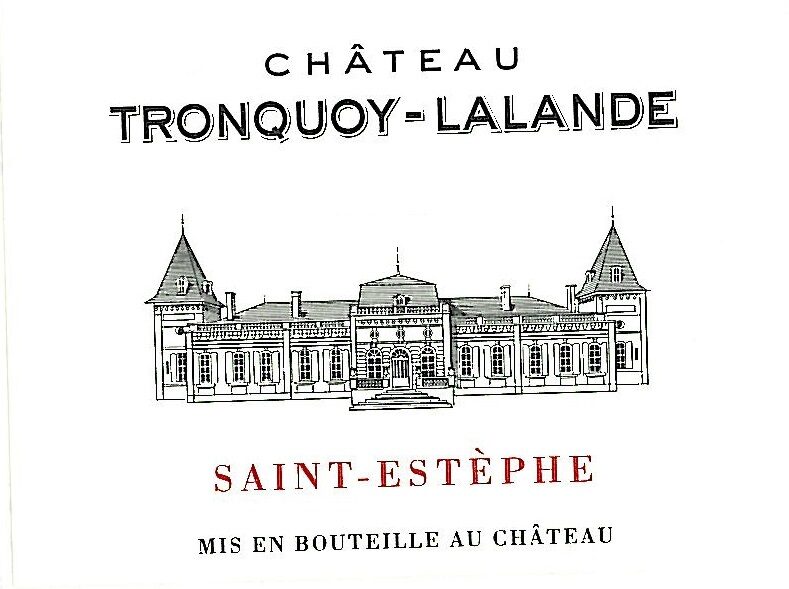
Traditional vinification in stainless steel vats. The wine is left on the skins for 18-22 days in temperature-controlled stainless steel vats.
12 months. 50% in oak barrels.
The terroir of Tronquoy-Lalande has a soil ideally suited to the flourishing of Merlot. This variety accounts for the majority of the plantings (52%) and points to a distinctive feature that sets Tronquoy-Lalande apart from its neighbours, where Cabernet Sauvignon dominates. Cabernet Sauvignon follows at 39%, then Petit Verdot (6%) and Cabernet Franc (3%). The vineyard enjoys an ideal exposure, very favourable to the ripening of the grapes. The soil is composed of a mixture of gravel and clay more than 8 metres thick. Gravel has the particular quality of being very free-draining, while clay holds water at depth and releases it according to need. The vineyard lies 23 metres above sea level. The gravel rises formed naturally over the centuries encourage the drainage of rainwater. In addition, the Gironde estuary, very close by, acts as a thermal regulator.
Availability, allocations and terms: the Compagnie Médocaine will reply promptly. The estate and vintage are already filled in in the message.
The texts below copy in one click for your product sheets, catalogues and social channels. The printable sheet condenses the whole page onto a single A4 page.
For this vintage, the media library contains: packshots. High-definition packshots, labels, back labels and lifestyle photos are reserved for clients and partners, on the Compagnie Médocaine’s VinCod media library.
Sheet checked on September 21, 2026. Technical data: the estate’s VinCod sheets. Critic scores: sources cited above, with their date. Vintage benchmarks and character: Compagnie Médocaine’s own editorial read. Soils and relief, where shown: the Compagnie Médocaine’s parcel survey and the Mapbox/IGN terrain model.