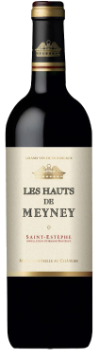
Saint-Estèphe · vintage 2018
 Grands crus atlas
Vintage benchmark: 95/100 (appellation benchmark, not a score for this wine)
Vintage character: After a spring marked by mildew, the heat concentrated a small crop: rich, ripe wines with great depth of material.
Overall reading of the year’s season across Saint-Estèphe. An estate can depart from it sharply, in frost or hail years, where two neighbours did not make the same vintage. What this particular wine actually gave is on its technical sheet and in the scores above.
A ruby red robe of very beautiful intensity with violet highlights. A rich, indulgent nose of blackcurrant, blueberry, sweet spice and graphite... An explosion of aromas. On the palate, this structured, very balanced wine shows a frank attack, a dense mid-palate and ripe, silky tannins.
Shares for this vintage, as recorded on the 2018 technical sheet. The vineyard itself is planted with cabernet sauvignon, merlot, petit verdot — a vintage blend departs from the area under vine as the year dictates.
After a hand harvest and meticulous sorting at the cellar, the grapes are vinified in vats of variable capacity, allowing a good plot-by-plot approach. Alcoholic fermentations are carried out after a few days of cold pre-fermentation maceration. Macerations of around twenty days on average before drawing off. Part of the wine undergoes its alcoholic fermentation in new barrels. The entire first wine is aged in French oak barrels, renewed each year to the extent of 30 to 40%, depending on the match between the oak and the vintage's potential.
Cabernet Sauvignon draws on a perfectly drained terroir of siliceous gravels and, together with Merlot, Cabernet Franc and Petit Verdot, gives rise to a wine that is ample, fleshy and structured. At maturity it develops the inimitable charm of the great Saint-Estèphes. Across the estate's 51 hectares, the vines, averaging 35 to 40 years of age, are made up of Cabernet Sauvignon (61%), Merlot (26%), Cabernet Franc (3%) and Petit Verdot (10%). Besides the Garonne gravels of which it is composed, the vineyard has one distinctive feature: a 3-metre-thick seam of blue clay buried in the subsoil, also found at Pétrus.
Availability, allocations and terms: the Compagnie Médocaine will reply promptly. The estate and vintage are already filled in in the message.
The texts below copy in one click for your product sheets, catalogues and social channels. The printable sheet condenses the whole page onto a single A4 page.
For this vintage, the media library contains: packshots. High-definition packshots, labels, back labels and lifestyle photos are reserved for clients and partners, on the Compagnie Médocaine’s VinCod media library.
Sheet checked on September 21, 2026. Technical data: the estate’s VinCod sheets. Critic scores: sources cited above, with their date. Vintage benchmarks and character: Compagnie Médocaine’s own editorial read. Soils and relief, where shown: the Compagnie Médocaine’s parcel survey and the Mapbox/IGN terrain model.