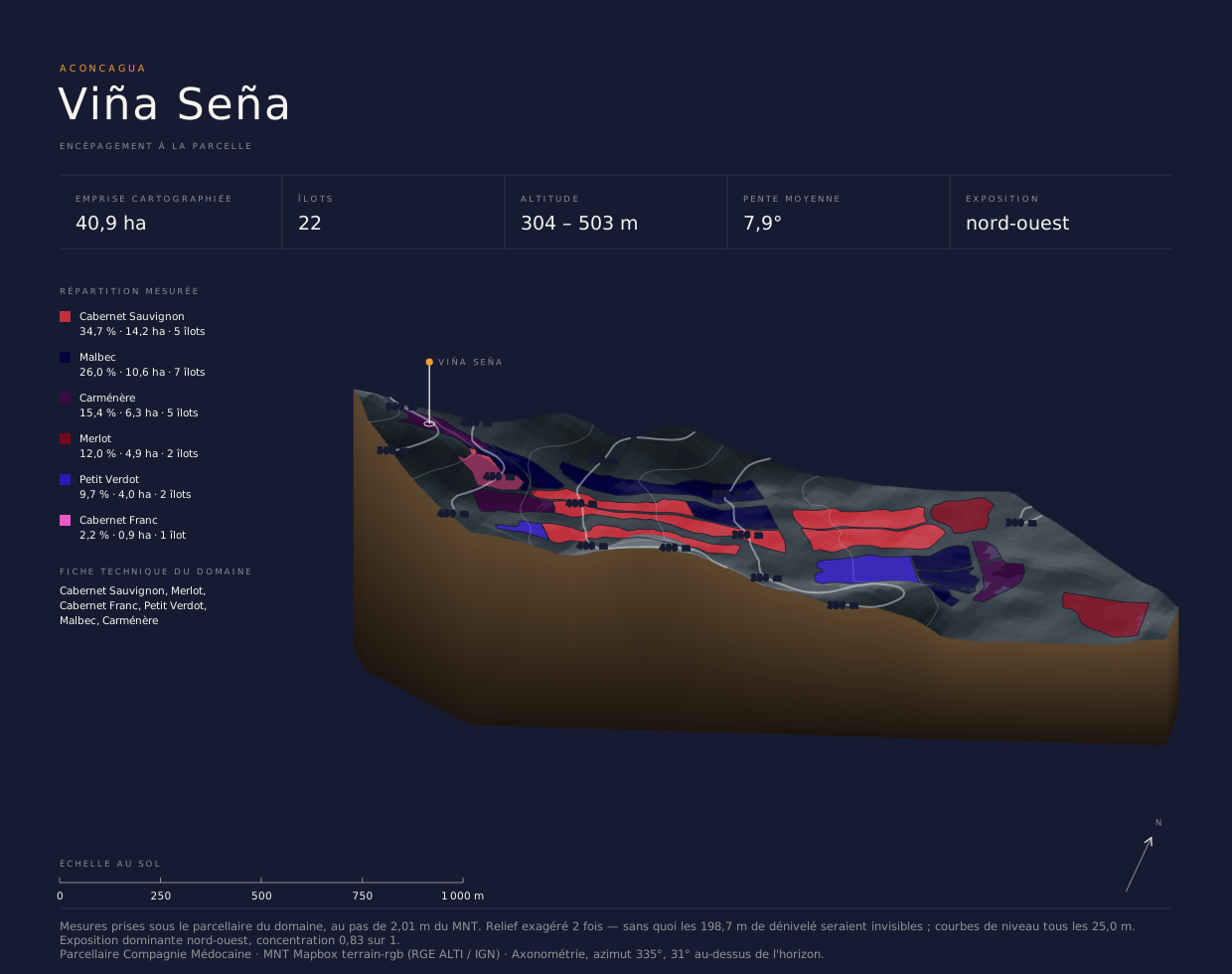
Area under vine at the estate, from its technical sheet — it does not change from one vintage to the next. Each vintage’s blend, by contrast, departs from it: that figures on its own page. The estate does not publish the share of each grape variety: they are listed without proportions.
In the 3D view: drag to rotate, scroll to zoom, Shift+drag to pan, double-click to reset.
Footprint, parcels and their split are measured on the Compagnie Médocaine’s own parcel survey; elevation, slope and aspect on the Mapbox terrain-rgb digital terrain model, derived from IGN’s RGE ALTI over France. Compare with the blend on the technical sheet, at the top of the page: the two answer different questions.
Why buy it
Eduardo Chadwick and Robert MondaviSeña was born from the partnership between the Chilean family and the Californian winemaker, at the foot of the Andes.
100/100 from James Suckling in 2021Nine vintages at 95 or above since 2009, and never below 95 over the same period.
Two weeks behind on harvestThe Aconcagua Valley is cooler than Chile's traditional red-wine regions.
Six grape varieties across forty-two hectaresCabernet sauvignon, carménère, merlot, cabernet franc, petit verdot and malbec, on highly diverse soils.
The wine
Guided by a family legacy, Eduardo Chadwick and Robert Mondavi created a Chilean wine of quality and distinctive character. Seña is the result of their remarkable partnership and of a journey to the foot of the Andes.
Terroir
The Seña vineyard covers 42 hectares planted to Cabernet Sauvignon, Carménère, Merlot, Cabernet Franc, Petit Verdot, Malbec and Syrah. The soils extend across the slopes of the valley and are extremely varied. The climate is a little cooler than the regions that traditionally produce Chilean red wines, yet warm enough for the grapes to reach an excellent level of ripeness. Harvest takes place on average two weeks later than in the vineyards situated further inside the valley.
A warm summer tempered by morning fog off the coast gave rapid, even ripening: harvest brought forward by a week, berries that stayed small, intense, structured wines.
Marked drought — 75 mm against a valley average of 219 mm — on seasonal temperatures: a reduced but concentrated harvest, with well-held acidity and color.
“Best score”: the highest score recorded for this wine, with its source. “Character”: the overall reading of the year across the appellation, which an estate may depart from.
Other cuvées from the estate
Rocas de Seña' Colchagua ValleyRouge · 3 vintages (2020–2022)
The texts below copy in one click for your product sheets, catalogues and social channels. The printable sheet condenses the whole page onto a single A4 page.
For this vintage, the media library contains: packshots, labels, lifestyle photos. High-definition packshots, labels, back labels and lifestyle photos are reserved for clients and partners, on the Compagnie Médocaine’s VinCod media library.
Sheet checked on September 21, 2026. Technical data: the estate’s VinCod sheets. Critic scores: sources cited above, with their date. Vintage benchmarks and character: Compagnie Médocaine’s own editorial read. Soils and relief, where shown: the Compagnie Médocaine’s parcel survey and the Mapbox/IGN terrain model.