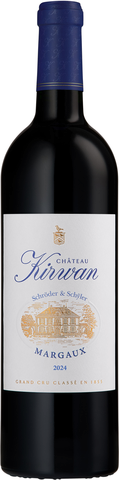
Margaux · vintage 2024
 Grands crus atlas
Vintage benchmark: 87/100 (appellation benchmark, not a score for this wine)
Vintage character: A rainy spring and a difficult flowering reduced the crop; the dry October saved fine, light, easy-drinking wines.
Overall reading of the year’s season across Margaux. An estate can depart from it sharply, in frost or hail years, where two neighbours did not make the same vintage. What this particular wine actually gave is on its technical sheet and in the scores above.
A brilliant, inviting red,
and a nose of fresh
red fruit you just want
to bite into. On the palate
it has the elegance of a Margaux,
a basket of fruit just
lightly macerated for extra
juiciness. You find
blackberry, blackcurrant, redcurrant,
but also a floral
character borrowed from the
cabernet franc. The tannin grain is
precise, coated, giving
length to the tasting.
This length on the palate
is also aromatic, it
contributes to the
generous, modern character of
the vintage.
Shares for this vintage, as recorded on the 2024 technical sheet. The vineyard itself is planted with 47 % cabernet sauvignon, 34 % merlot, 10 % cabernet franc, 8 % petit verdot, 1 % carménère — a vintage blend departs from the area under vine as the year dictates.
Tanks filled by gravity. Alcoholic and malolactic fermentations conducted simultaneously with selected yeasts and bacteria. Vatting of 7 to 15 days in temperature-controlled tulip-shaped concrete tanks at 25–26°C, followed by a maceration of 18 to 25 days, adjusted by daily tasting. Pump-overs 2 to 3 times a day during the fermentation phase. Gentle vertical pressing with direct gravity flow into barrel for the press wines. Free-run drawing off also carried out directly into barrel. Racking without aeration every 3 to 4 months.
18 to 21 months in French oak barrels
Annual renewal of 1/3 of the barrel stock with new barrels
With 40 ha of vines and 46 separate parcels, Kirwan continues to develop the rich potential of its terroir, adapting viticulture to the soil and the climate. Situated on the gravel rise of Cantenac, bordering the river born of a thousand-year erosion, this terroir reveals and expresses its geological capital. Recently confirmed by a soil study aimed at better understanding the composition of the soils, the role of the gravels is essential: by aiding drainage and warming, it encourages the roots to explore deep down. The clay captures water and preserves its freshness, playing a key moderating role during severe droughts or heatwaves.
Availability, allocations and terms: the Compagnie Médocaine will reply promptly. The estate and vintage are already filled in in the message.
The texts below copy in one click for your product sheets, catalogues and social channels. The printable sheet condenses the whole page onto a single A4 page.
For this vintage, the media library contains: packshots, labels. High-definition packshots, labels, back labels and lifestyle photos are reserved for clients and partners, on the Compagnie Médocaine’s VinCod media library.
Sheet checked on September 21, 2026. Technical data: the estate’s VinCod sheets. Critic scores: sources cited above, with their date. Vintage benchmarks and character: Compagnie Médocaine’s own editorial read. Soils and relief, where shown: the Compagnie Médocaine’s parcel survey and the Mapbox/IGN terrain model.