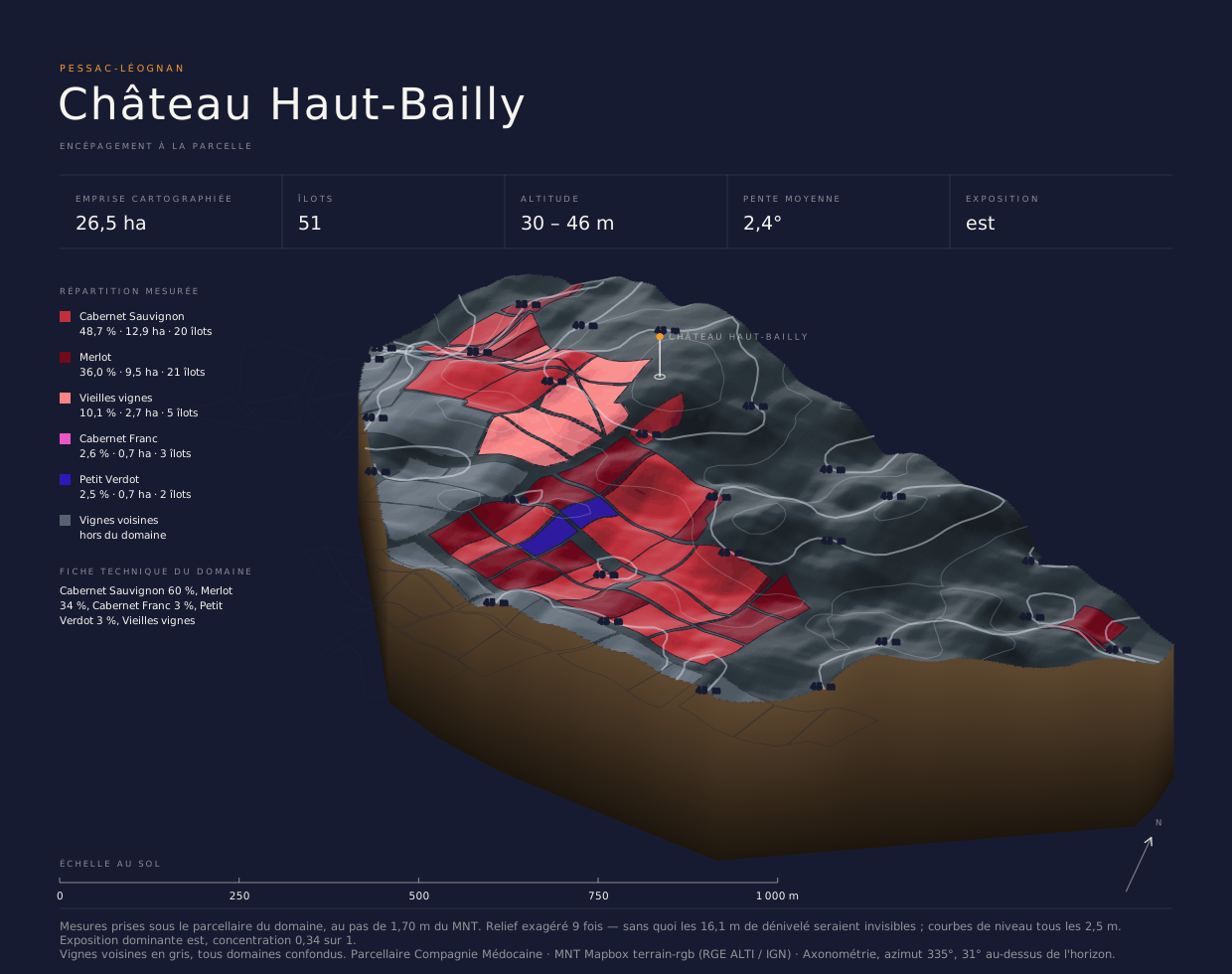
Area under vine at the estate, from its technical sheet — it does not change from one vintage to the next. Each vintage’s blend, by contrast, departs from it: that figures on its own page.
In the 3D view: drag to rotate, scroll to zoom, Shift+drag to pan, double-click to reset.
Footprint, parcels and their split are measured on the Compagnie Médocaine’s own parcel survey; elevation, slope and aspect on the Mapbox terrain-rgb digital terrain model, derived from IGN’s RGE ALTI over France. Compare with the blend on the technical sheet, at the top of the page: the two answer different questions.
Why buy it
Thirty hectares in a single blockOn one of the highest gravel rises of the Left Bank, at the gates of Bordeaux.
Cru Classé de GravesSoils of sand mixed with gravel, over a subsoil of falun, fossilized shell-limestone that gives the terroir its character.
100/100 from James Suckling in 2020Fourteen vintages at 95 or above since 2008, never below 95 since 2009.
Seven coopers for a single wineSixteen months of ageing, half in new barrels.
The wine
Noble and refined, the style of Haut-Bailly rests above all on a subtle balance between finesse and concentration.
Terroir
A Grand Cru Classé at the gates of Bordeaux, Château Haut-Bailly looks out majestically over a 30-hectare vineyard in a single block, established on one of the highest gravel rises of the left bank. It benefits from an excellent gradient of the slopes, effective drainage and well-distributed ditches that carry the water away in wet years. Of the three components of terroir, the soil is the most subtle: here it combines a soil of sands mixed with gravels that slipped down in the Quaternary era with a subsoil of falun, or petrified fossil stone, which is one of its major characteristics.
Drought without any halt in ripening, together with cool nights, gave a legendary vintage: concentrated, with firm tannins and very long aging potential.
“Best score”: the highest score recorded for this wine, with its source. “Character”: the overall reading of the year across the appellation, which an estate may depart from.
Other cuvées from the estate
La Parde Haut-BaillyRouge · 10 vintages (2008–2017)
The texts below copy in one click for your product sheets, catalogues and social channels. The printable sheet condenses the whole page onto a single A4 page.
For this vintage, the media library contains: packshots, lifestyle photos. High-definition packshots, labels, back labels and lifestyle photos are reserved for clients and partners, on the Compagnie Médocaine’s VinCod media library.
Sheet checked on September 21, 2026. Technical data: the estate’s VinCod sheets. Critic scores: sources cited above, with their date. Vintage benchmarks and character: Compagnie Médocaine’s own editorial read. Soils and relief, where shown: the Compagnie Médocaine’s parcel survey and the Mapbox/IGN terrain model.
 Château Larrivet Haut-Brion
 Château Malartic-Lagravière
 Château Smith Haut-Lafitte