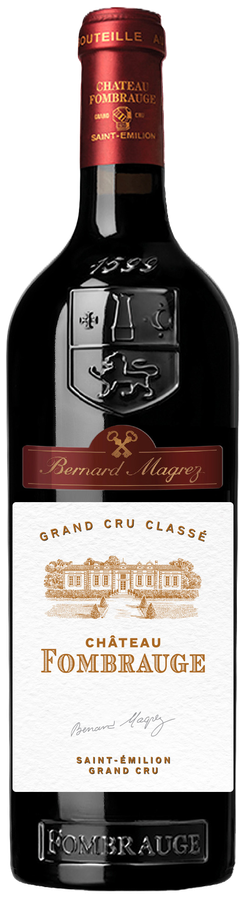
Saint-Émilion · vintage 2025
 Grands crus atlas
Vintage benchmark: 94/100 (appellation benchmark, not a score for this wine)
Vintage character: A dry summer and cool nights gave balanced merlots, pure and without excess ripeness.
Overall reading of the year’s season across Saint-Émilion. An estate can depart from it sharply, in frost or hail years, where two neighbours did not make the same vintage. What this particular wine actually gave is on its technical sheet and in the scores above.
The colour shows a fine ruby intensity, highlighted by delicate violet reflections. The nose is generous, built around ripe fruit, enriched with more complex nuances of spice and floral notes.
The palate, ample and harmonious, combines delicacy and finesse. The silky, gourmand tannins bring an appealing texture and great elegance to the whole.
Mild and dry winter, mild spring, summer with heatwave conditions until late August followed by milder temperatures. Harvest from 15 to 29 September. Vatting periods of 25 to 28 days. Bottling: spring 2027.
Shares for this vintage, as recorded on the 2025 technical sheet. The vineyard itself is planted with 92 % merlot, 8 % cabernet franc — a vintage blend departs from the area under vine as the year dictates.
Filling of small-capacity (70 hl) wood, stainless steel and concrete tanks, by gravity. Pre-fermentation maceration of 4 to 8 days at 8°C. Extraction of polyphenols adapted to each tank according to the origin of the terroir, with daily tasting. R'pulse: gentle extraction and more roundness in the wines.
75% in barrels (one third in new oak), 25% in various vessels (stoneware, concrete, stainless steel)
Château Fombrauge lies on the extension of the plateau and limestone slopes of Saint-Emilion; its large area favours a diversity of soils and exposures that give the wine of Fombrauge its complexity and identity. First, the front line of the main plateau, a relief typical of the Saint-Emilion vineyard on which Fombrauge sits, results from the partial erosion of the Tertiary formations by the rivers that surround it (the Dordogne and the Isle). The structure of this part is mainly composed of Tertiary starfish limestone (calcaire à astéries). The particularly high-quality south-facing slope consists of white clays where the Tertiary formations withstood this erosion. There are perched limestone plateaus, surrounded by slopes on which soft molassic rocks (clay mixed with limestone) outcrop.
Availability, allocations and terms: the Compagnie Médocaine will reply promptly. The estate and vintage are already filled in in the message.
The texts below copy in one click for your product sheets, catalogues and social channels. The printable sheet condenses the whole page onto a single A4 page.
For this vintage, the media library contains: packshots. High-definition packshots, labels, back labels and lifestyle photos are reserved for clients and partners, on the Compagnie Médocaine’s VinCod media library.