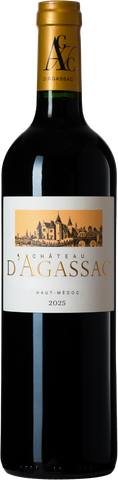
Haut-Médoc · vintage 2019
 Grands crus atlas
Vintage benchmark: 96/100 (appellation benchmark, not a score for this wine)
Vintage character: A hot end of summer after a rainy spring gave wines that hold ripeness and freshness together; the cabernets shine here.
Overall reading of the year’s season across Haut-Médoc. An estate can depart from it sharply, in frost or hail years, where two neighbours did not make the same vintage. What this particular wine actually gave is on its technical sheet and in the scores above.
Shares for this vintage, as recorded on the 2019 technical sheet. The vineyard itself is planted with 53 % merlot, 44 % cabernet sauvignon, 3 % cabernet franc — a vintage blend departs from the area under vine as the year dictates.
23 temperature-controlled stainless steel tanks, cuvaison of between 21 and 26 days, no malolactic fermentation in
barrel. Extraction by punching down (terrace 4) and pump-over (terrace 5). Very gentle
extractions in 2019, as the material was very fine and easily extractable. Vinification at 24°C
12-15 months, 60% in new oak and 40% in tank to preserve the fruit. Barrels chosen are
mostly made with oak from the Jupilles forest to accentuate the
tension of the wines. Barrels toasted at very low intensity, a slow toast to the core, to
preserve the expression of the terroir and the purity of aroma.
The estate's two great assets lie in the quality of its terroir and in its precious capital of old vines. The terroir, with its warm, well-drained deep gravel soils and its exposure to the sun, is marked by a very early-ripening character, and Agassac is often the first to harvest in the region. The vineyard, made up of two walled blocks totalling 42 hectares, consists mainly of old vines — 40 years old on average across 22 hectares — which form the qualitative heart of production. Since 1997 the picture has been reshaped by grubbing up certain less worthy parcels and by planting Cabernet on the finest gravel soils, until then unplanted.
Availability, allocations and terms: the Compagnie Médocaine will reply promptly. The estate and vintage are already filled in in the message.
The texts below copy in one click for your product sheets, catalogues and social channels. The printable sheet condenses the whole page onto a single A4 page.
For this vintage, the media library contains: packshots, labels. High-definition packshots, labels, back labels and lifestyle photos are reserved for clients and partners, on the Compagnie Médocaine’s VinCod media library.
Sheet checked on September 21, 2026. Technical data: the estate’s VinCod sheets. Critic scores: sources cited above, with their date. Vintage benchmarks and character: Compagnie Médocaine’s own editorial read. Soils and relief, where shown: the Compagnie Médocaine’s parcel survey and the Mapbox/IGN terrain model.